How to Optimize Your Biomass Pyrolysis Plant for Maximum Efficiency?
In today's renewable energy landscape, optimizing a Biomass Pyrolysis Plant is crucial. Dr. John Smith, a renowned expert in bioenergy, emphasizes, “Efficiency in biomass conversion is key to sustainability.” His insights guide us in understanding the importance of refining processes and maximizing outputs.
A Biomass Pyrolysis Plant converts organic materials into valuable products. With increasing demands for clean energy, every aspect of the process must be examined. Inefficiencies in heat transfer, feedstock preparation, and reactor design can hinder performance. Small changes often lead to significant gains.
Yet, achieving peak efficiency is not straightforward. Common issues include inconsistent feedstock quality and equipment maintenance challenges. These factors can disrupt operations and lower profitability. Constant reflection and adaptation are essential. Overall, focusing on these areas enhances the effectiveness of Biomass Pyrolysis Plants, paving the way for future advancements.
Key Considerations for Biomass Feedstock Selection and Preparation
Selecting the right biomass feedstock is crucial for optimizing your pyrolysis plant. The type of material you use affects the yield and quality of biochar and bio-oil. Common feedstocks include wood chips, agricultural residues, and organic waste. Each has its own characteristics that can influence the process.
Consider moisture content. High moisture can reduce efficiency. Aim for feedstocks with moisture below 15%. Drying the feedstock might be necessary. This process requires energy, which can offset gains. Finding a balance is key.
Tips: Ensure uniformity in size. Smaller, uniform pieces cook more evenly. This consistency improves pyrolysis efficiency. Storage is also important. Keep feedstock in a dry place to avoid spoilage. Experiment with different blends to see what works best for your system. Each input has its challenges, prompting reflection on your approach.
Optimizing Pyrolysis Temperature and Time for Enhanced Product Quality
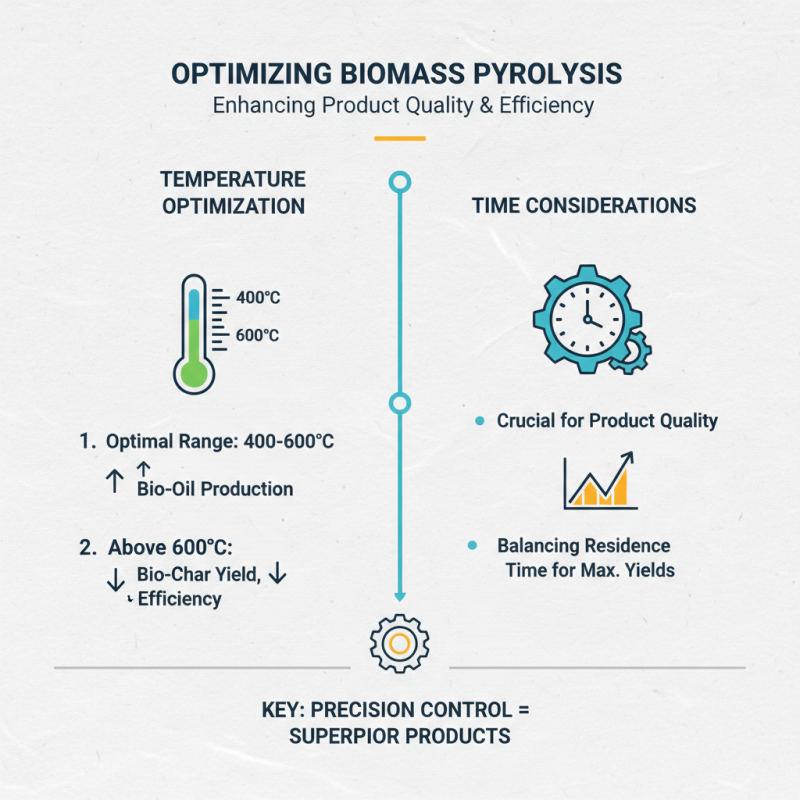
Optimizing pyrolysis temperature and time is crucial for enhancing product quality in biomass pyrolysis plants. A recent report highlighted that the optimal pyrolysis temperature range is typically between 400°C to 600°C. Within this range, the production of bio-oil shows a significant increase. However, exceeding 600°C can lead to reduced bio-char yield, negatively impacting overall efficiency.
The duration of the pyrolysis process also plays a vital role. Industry data suggests that reaction times between 30 to 90 minutes can yield the highest quality products. Shorter times can leave unconverted biomass while longer durations often degrade the bio-oil. Attention must be paid to the biomass feedstock type, as different materials react uniquely under varying conditions.
Controlling factors like heating rate and reactor design further contributes to product quality. Studies indicate that rapid heating can enhance bio-oil yields but may sacrifice char quality. This trade-off suggests that optimizing these parameters requires careful reflection and experimentation. Balancing these aspects is essential for maximal efficiency and to reduce waste. Sustainable pyrolysis remains a complex challenge, demanding innovative solutions and continual refinement of practices.
Methods for Improving Heat Recovery in Biomass Pyrolysis Processes
Heat recovery is crucial in maximizing the efficiency of biomass pyrolysis plants. Effective heat recovery systems can recapture up to 50% of the thermal energy generated during the pyrolysis process. This energy can then be reused to preheat biomass feedstocks or assist in other processes, reducing fuel costs. According to the International Bioenergy Conference, improved heat exchange methods can lead to an increase in overall system efficiency by around 20%.
Tips: Consider utilizing heat exchangers. They can significantly improve heat recovery rates. Proper maintenance of these systems is essential. Over time, accumulation can reduce efficiency.
In addition to heat exchangers, integrated systems that combine heat recovery with carbon capture technologies present untapped potential. This method not only enhances heat recovery but also minimizes emissions. Research indicates that such systems can boost operational efficiency by up to 30%. However, implementation costs and operational complexities can be hurdles that need addressing.
Tips: Analyze the costs versus benefits. Investing in advanced heat recovery technologies may pay off long-term. Regular system evaluations are a must to ensure consistent performance.
Efficiency Improvement in Biomass Pyrolysis Processes
Monitoring and Control Systems for Efficient Plant Operation
Effective monitoring and control systems play a crucial role in the efficiency of biomass pyrolysis plants. These systems collect real-time data on temperature, pressure, and feedstock flow rates. For example, installing sensors at key points can help track the conditions within the reactor. With accurate data, operators can make quick decisions to adjust parameters. This immediate response can prevent overheating or incomplete reactions.
Implementing advanced control strategies, such as PID controllers, can further enhance performance. They allow for automated adjustments based on the collected data. However, reliance on automation can lead to challenges. If sensors fail, or data becomes inaccurate, it can disrupt operations. Regular maintenance and calibration of equipment are essential to avoid such pitfalls. A comprehensive approach is needed, blending technology with human expertise.
Utilizing data analytics tools can offer insights into plant performance. These tools help identify trends and inefficiencies over time. For instance, operators might notice that specific feedstock types lead to better yields. Actively engaging in this analysis can drive improvements. It is important to remember that optimization is an ongoing process. Continuous learning and adaptation are essential for long-term success.
Maintenance Practices to Ensure Long-Term Performance of Pyrolysis Equipment
Regular maintenance is crucial for a biomass pyrolysis plant. Without it, equipment can wear out quickly. Schedule frequent inspections. Check essential parts like reactors and condensers. Look for wear and tear. Small issues can escalate if ignored. Cleaning is also vital. Residue can build up, affecting performance.
Ensure all safety devices function properly. This helps prevent accidents. Keep an eye on temperature and pressure gauges. Fluctuations can indicate problems. Adjust settings before they lead to failures. Don't overlook the importance of employee training. Workers need to recognize signs of wear.
Documentation is often overlooked. Keep detailed logs of maintenance checks. It provides insight over time. Patterns in breakdowns can surface. This knowledge helps improve practices. While maintenance is a challenge, it’s essential for longevity. Reflection on past issues guides future actions.