How to Choose the Right Trash Incinerators for Your Waste Management Needs?
Choosing the right trash incinerators can greatly impact waste management efficiency. Dr. Sarah Thompson, a leading expert in waste technology, emphasizes, "Selecting the right incineration system is crucial for sustainable waste management." With growing environmental concerns, the demand for effective waste solutions rises.
Trash incinerators come in various designs and technologies. Understanding specific needs is essential. Factors like waste type, volume, and emission standards should guide decisions. Modern incinerators offer advanced features, including emissions control and energy recovery. However, not all systems meet every requirement.
Inflated expectations can lead to issues. Oversized or outdated systems may fail to perform effectively. Investing in trash incinerators requires careful consideration of both capabilities and limitations. This balance ensures reliable waste processing while minimizing environmental impact.
Factors to Consider When Selecting Trash Incinerators
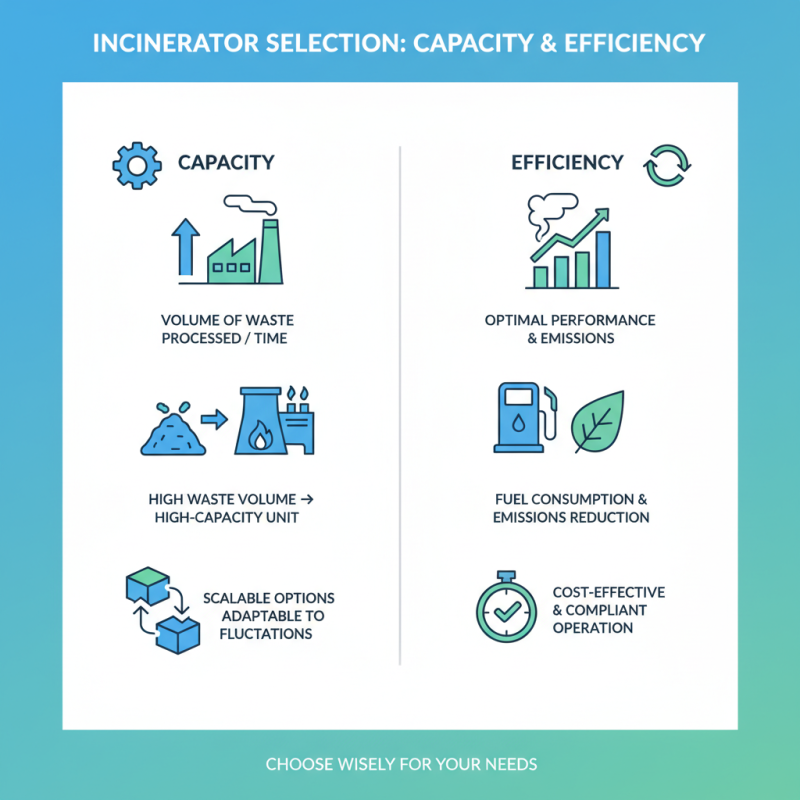
Choosing the right trash incinerator involves careful consideration. Various factors affect efficiency and suitability. Energy recovery capabilities are crucial. Some systems can convert 70% of waste into energy. High-efficiency models often result in lower operational costs.
Another vital aspect is emissions control. Incinerators should meet local regulations. The World Health Organization indicates that poor air quality can lead to serious health issues. Therefore, selecting models with advanced filtration systems is essential. The effectiveness of these systems can vary. It’s important to assess real-world performance data.
Size and capacity are significant concerns as well. An incinerator that is too small can result in inefficient waste processing. Conversely, a model that is too large may lead to wasted resources. It is essential to evaluate the volume of waste generated regularly. Many facilities find their actual needs differ greatly from estimates. This leads to operational challenges. Proper planning and assessment are key to successful waste management.
How to Choose the Right Trash Incinerators for Your Waste Management Needs? - Factors to Consider When Selecting Trash Incinerators
| Factor |
Description |
Importance Level |
| Capacity |
The amount of waste the incinerator can process per hour or day. |
High |
| Emission Standards |
Compliance with local and international air quality regulations. |
Critical |
| Fuel Type |
The type of fuel required for the incinerator (e.g., oil, gas, electricity). |
Medium |
| Operational Costs |
Costs associated with running and maintaining the incinerator. |
High |
| Footprint |
The physical space required for installation. |
Medium |
| Technology Type |
The technology employed, such as mass burn or gasification. |
High |
| End Product |
The type of residue produced and its marketability. |
Medium |
| Manufacturer Support |
Availability of customer service, training, and maintenance support. |
High |
Types of Trash Incinerators Available for Waste Management
When it comes to waste management, choosing the right type of trash incinerator is crucial. Various models serve different needs. For instance, large-scale municipal incinerators can handle tons of waste daily. These systems often incorporate advanced emission controls, reducing harmful pollutants significantly. According to a recent industry report, these large units can cut waste volume by up to 90%.
On the other hand, smaller, modular incinerators cater to businesses or communities with specific waste types. They are flexible but may have lower processing capacities. A study shows that commercial units can process about 250 kg of waste per hour, making them suitable for hotels or restaurants. Choosing the right type depends not just on capacity but on waste profiles and regulatory compliance.
Consideration should also be given to the environmental impact. Not all incinerators are equal in emission outputs. Despite advancements in technology, some models still raise concerns about dioxin emissions. A report from an environmental agency suggests that thorough research on the incineration system is vital. It challenges the assertion that all incinerators are environmentally friendly, reminding users that not every model meets the same standards. Make informed decisions based on waste specifics and regulatory requirements.
Comparative Analysis of Trash Incinerator Types
This bar chart displays the efficiency and typical capacity of different types of trash incinerators used in waste management. The data highlights the average energy recovery percentage and the waste processing capacity for each type.
Regulatory Compliance and Environmental Impact of Incinerators
When selecting trash incinerators, regulatory compliance is crucial. Various regulations govern emissions and operational standards. For example, the United States Environmental Protection Agency (EPA) mandates that dioxin emissions from incinerators must not exceed 0.1 ng/m3. This ensures that air quality remains safe for nearby communities. Ignoring these regulations can lead to heavy fines. They can also result in shutdowns, affecting waste management efficiency.
The environmental impact of incineration technologies is complex. While incinerators can reduce waste volume by up to 90%, they produce harmful emissions. Contaminants like carbon monoxide and heavy metals can be released without adequate controls. A 2021 report by the World Health Organization indicated that improper management of incineration could lead to significant public health issues. The management of the ash residue also poses challenges. It can contain toxic substances, requiring careful handling.
Addressing these challenges demands advanced technologies and stringent monitoring. Some newer incinerators come equipped with filters and scrubbers. These help reduce harmful output considerably. However, implementing such measures can be costly. Cities and waste management companies need to evaluate their budgets. Balancing compliance with environmental stewardship remains a pressing issue. Decision-makers must weigh the benefits of waste-to-energy against the potential risks to community health and safety.
Maintenance and Operational Costs of Trash Incinerators
When considering trash incinerators, maintenance and operational costs are crucial. Regular upkeep is essential to ensure efficiency. Filters and burners need frequent checks. This can add up. An overlooked component can lead to significant repair costs.
Operational costs depend on various factors. Fuel prices fluctuate, impacting the overall expenditure. Daily staff requirements also play a role. Proper training is vital. An untrained operator may waste resources, increasing costs.
Moreover, some facilities underestimate waste composition. If the waste is largely organic, burning efficiency declines. This makes waste preprocessing essential. It requires additional resources and time. Balancing these factors can be challenging. Regular audits may help identify issues early, saving money in the long run.