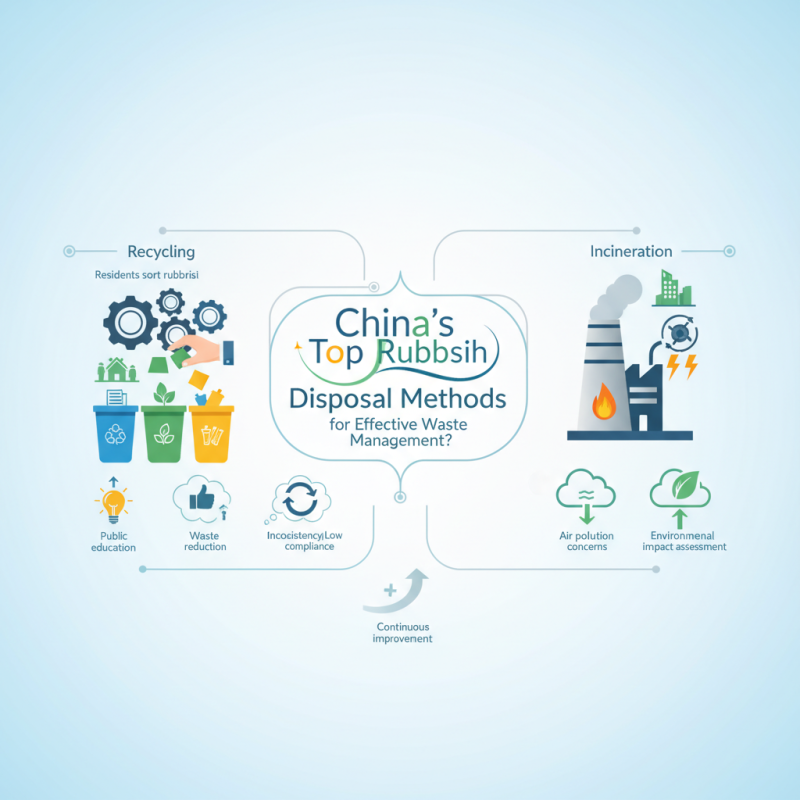
China Top Rubbish Disposal Methods for Effective Waste Management?
In the vast landscape of waste management, China's approach to disposal rubbish stands out. The nation faces significant challenges due to its large population and rapid urbanization. Efficient rubbish disposal is crucial not just for public health but also for environmental sustainability. A mix of advanced technology and traditional practices shapes China's methods.
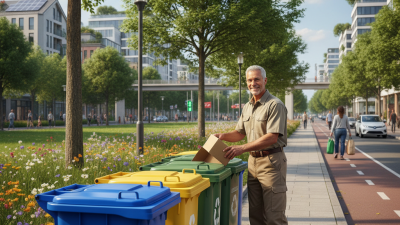
One effective method is recycling. In many cities, residents sort their rubbish into designated bins. This practice educates the public about waste reduction. However, weaknesses exist. Not all households comply with sorting rules. This inconsistency affects overall recycling rates.
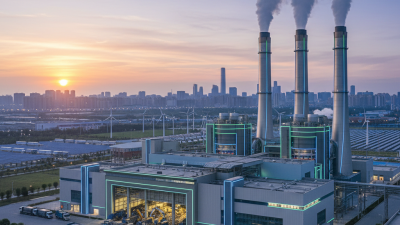
Incineration is another prominent waste disposal method, converting rubbish into energy. While this reduces landfill use, it raises concerns about air pollution. Furthermore, the balance between energy production and environmental impact requires constant assessment. Continuous improvement in these areas is vital for effective waste management.
Current Waste Management Challenges in China
China faces significant challenges in waste management. Rapid urbanization has led to increased waste generation, straining existing infrastructure. Many cities lack effective sorting systems for recyclables. This results in valuable materials ending up in landfills.
Public awareness is another hurdle. Many citizens still lack understanding of proper disposal methods. Without education, recycling rates remain low. There's also an issue with illegal dumping. Some areas see waste carelessly discarded, posing environmental risks.
Authorities are attempting to improve the situation. New regulations aim to enhance waste sorting and management. However, these initiatives often lack the necessary enforcement. Moreover, facilities for processing waste are insufficient in many regions. It calls for a collective effort from both government and citizens to address these pressing issues effectively.
Overview of Rubbish Disposal Methods in China
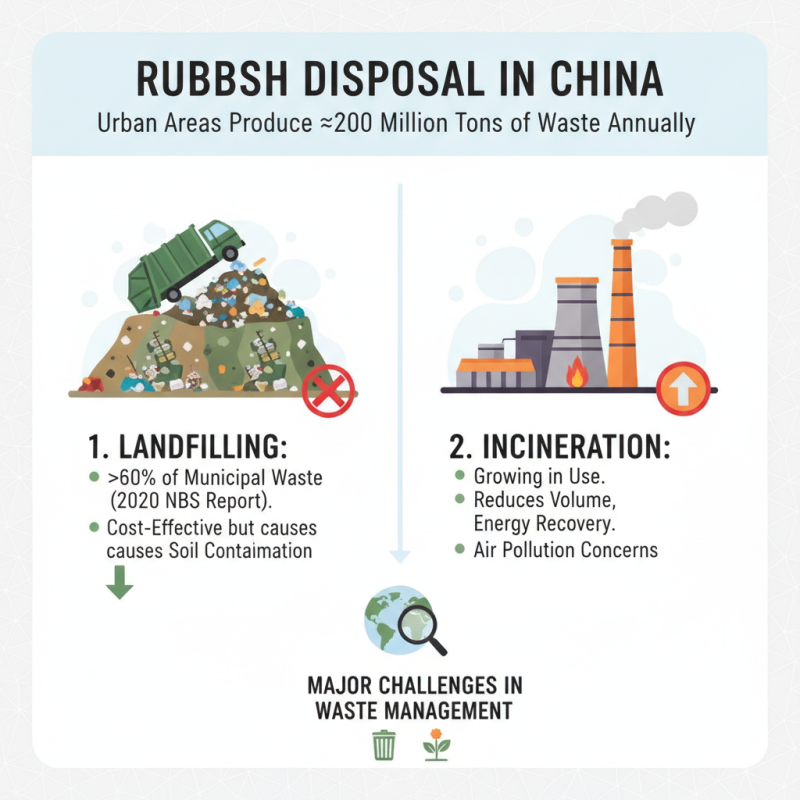
China faces significant challenges in waste management, with urban areas producing roughly 200 million tons of waste annually. Traditional disposal methods, such as landfilling and incineration, dominate the scene. According to a 2020 report by the National Bureau of Statistics, over 60% of municipal waste ends up in landfills. While landfilling is cost-effective, it raises environmental concerns, such as soil contamination.
Incineration has gained popularity, as it reduces waste volume by about 90%. However, emissions from incinerators can harm air quality. Many facilities do utilize advanced filtration systems, yet public skepticism remains. Innovative methods, like waste sorting, are essential for improving recycling rates, which currently stand at just 20%.
Tips: Implementing community awareness programs can enhance waste sorting habits. Collaboration between local authorities and residents aids in promoting best practices. Investing in education around waste management allows for better community participation. Despite progress, a gap exists in recycling technology and public engagement. Addressing these weaknesses is crucial for sustainable waste management.
Recycling Initiatives and Practices in Urban Areas
Urban areas in China are making significant strides in recycling initiatives. A report by the China Waste Management Association noted that urban recycling rates reached approximately 30% in 2022. This marks a substantial increase from previous years. However, the figures indicate room for improvement. Many cities face challenges, such as inconsistent collection systems and public awareness.
The successful implementation of recycling programs relies heavily on community engagement. In some cities, educational campaigns have been launched to inform residents about the importance of separating waste. Reports suggest that when citizens are well-informed, recycling rates can increase by up to 15%. Yet, despite these efforts, many still struggle with proper waste sorting. Confusion often arises around what can and cannot be recycled, highlighting the need for clearer guidelines.
Moreover, technology plays a crucial role in enhancing recycling processes. Smart bins equipped with sensors can track waste levels and optimize collection routes. A recent study revealed that using smart technology can improve collection efficiency by over 20%. Nonetheless, the adoption of such technologies is uneven across cities. Some urban areas lack the necessary funding, while others have not prioritized these advancements. These factors illustrate the complexities of effective waste management in urban environments.
Technological Innovations in Waste Disposal
China is increasingly embracing technological innovations for effective waste management.
Smart waste sorting systems now use AI to automatically differentiate between recyclables and non-recyclables.
This technology drastically reduces the amount of waste sent to landfills. Furthermore, IoT-enabled bins track waste levels.
These bins notify collection services, optimizing routes and reducing emissions.
Tips: Consider implementing simple waste sorting at home.
Use separate bins for recyclables and organic waste. This practice encourages responsible disposal and makes recycling easier.
Another innovation is waste-to-energy plants. These facilities convert non-recyclable waste into energy, providing an alternative power source.
However, the technology is not without flaws. Emissions and byproducts may pose environmental risks.
Continuous research is necessary to enhance safety measures and efficiency.
Tips: Stay informed about local waste management policies.
Engaging with your community can lead to better practices. Participate in local cleanup events to raise awareness about waste issues.
Case Studies: Successful Waste Management Programs in Chinese Cities
In recent years, several Chinese cities have implemented innovative waste management programs. For example,
Beijing has introduced a classification system for household waste. Residents are required to
separate recyclables from other waste. This initiative aims to boost recycling rates and reduce landfill usage.
Surveys indicate that most citizens are gradually adapting to this system, but some confusion remains
regarding proper sorting methods.
Shenzhen has taken a different approach. It has
established waste-to-energy plants. These facilities convert waste into
electricity. It reduces landfill dependency while generating clean energy. However, the initial investment
costs and public perception pose challenges. Some citizens voice concerns about air quality and emissions,
indicating a need for improved transparency and education.
Hangzhou's program
emphasizes community involvement. Local volunteers help educate residents on best practices for waste
disposal. They conduct workshops and distribute informational materials. While participation is high, there
are reports of inconsistency in engagement. Some neighborhoods actively participate, while others lag,
highlighting the importance of continuous motivation and outreach efforts.