China Top 10 Tyre Recycling Machines at 2026 Canton Fair?
The upcoming 2026 Canton Fair will showcase the top innovations in various industries. Among these, the Tyre Recycling Machine stands out due to its environmental significance. These machines play a crucial role in transforming used tyres into valuable materials, greatly benefiting sustainability efforts.
At the fair, visitors will observe cutting-edge technology in tyre recycling. Many exhibitors will present different models of Tyre Recycling Machines, each boasting unique features designed to enhance efficiency. This focus on advanced machinery aligns with the fair’s emphasis on innovative manufacturing and new materials.
However, not all machines meet the highest standards. Some may lack vital certifications like ISO or CE, raising concerns among potential buyers. It’s essential for attendees to conduct thorough evaluations before making commitments. The integration of AI tools at the fair should aid in identifying reliable suppliers. Nonetheless, the risk of overlooking important details remains. Attendees must stay vigilant while navigating the expansive exhibition space to maximize their experience.
Overview of Tyre Recycling Machines in China
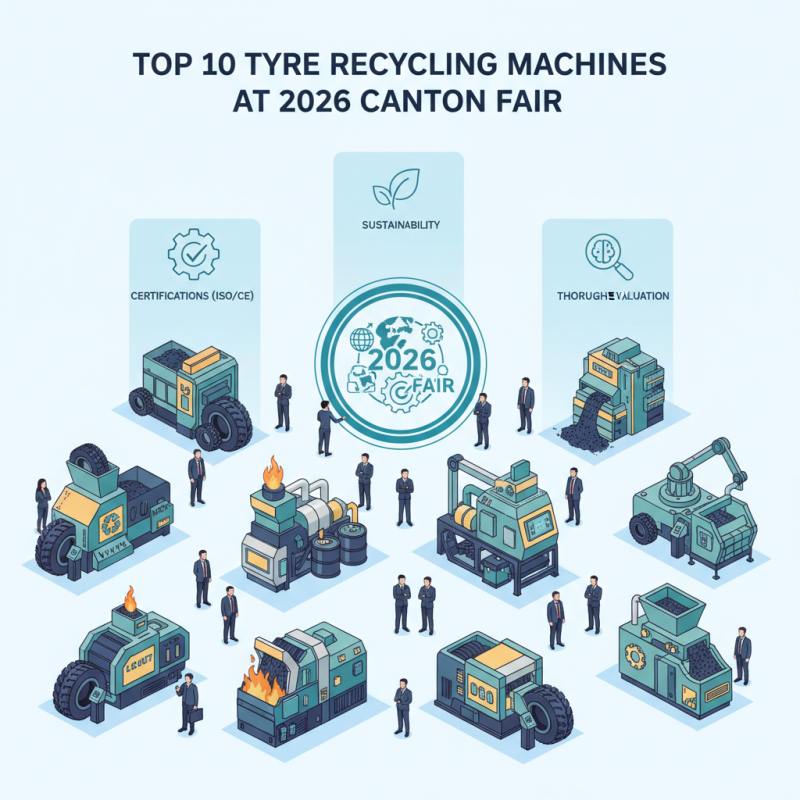
Tyre recycling in China is a growing industry, focusing on innovation and sustainability. The 2026 Canton Fair is set to showcase ten leading tyre recycling machines. These machines play a crucial role in reducing waste and transforming old tyres into valuable materials. Efficiency and performance are critical factors for manufacturers and consumers alike.
When attending the Canton Fair, consider these tips. Look for machines that offer high throughput and low energy consumption. Compare the technologies used in different models. You might find some machines that lack advanced features, which limits their efficiency. This can be a crucial decision point for your investment.
Moreover, think about the environmental impact of these machines. How do they contribute to a greener future? Some models may not meet the latest eco-standards, and it’s essential to evaluate them thoroughly. Understand the importance of quality and reliability when selecting a recycling solution. These factors can greatly influence your operational success.
Significance of the Canton Fair in Industrial Innovations
The Canton Fair is a vital platform for industrial innovations. This trade show brings together various industries, showcasing the latest advancements. Tyre recycling machines are gaining significant attention this year. These machines transform waste into valuable resources. The focus on sustainability is evident.
Visitors can explore numerous innovative technologies. However, challenges still exist. Some exhibitors present less efficient designs. Others may overlook essential environmental standards. This highlights a need for continuous improvement in the industry. Engaging conversations promote new ideas and solutions.
Moreover, collaboration is crucial. Many companies are eager to share their insights. This exchange can lead to more effective recycling processes. Networking opportunities abound at the fair. Attendees leave inspired but must address shortcomings. Reflecting on these challenges leads to progress in tyre recycling technology.
Top Features of Leading Tyre Recycling Machines in 2026
The tyre recycling machines showcased at the 2026 Canton Fair are a testament to innovative engineering. Many models feature state-of-the-art shredding systems. These systems offer enhanced efficiency, breaking down tyres into smaller pieces with minimal energy consumption. This is vital for reducing operational costs in recycling processes.
Another notable feature is the integration of advanced separation technologies. These machines can effectively separate rubber, metal, and fabric components. This separation is crucial for maximizing material recovery. Some machines employ sophisticated optical and magnetic sensors. However, implementation can be challenging, as not all facilities may be equipped for such advanced technology.
Efficiency is an often-discussed topic among manufacturers. While high throughput is essential, maintaining quality is equally crucial. Some machines may struggle with inconsistent input materials. This inconsistency impacts the final product's quality. Constant adjustments are necessary, and this can lead to production delays. Balancing speed and quality remains a common hurdle. Many industry experts encourage continual assessment of operational efficiency and technology adaptability.
China Top 10 Tyre Recycling Machines at 2026 Canton Fair
| Model |
Processing Capacity (kg/h) |
Power Requirement (kW) |
Material Recovery Rate (%) |
Key Features |
| Model A |
1000 |
150 |
99 |
Automatic Feeder, Low Noise Operation |
| Model B |
1200 |
180 |
95 |
Dual-Shredder, Energy Efficient |
| Model C |
800 |
120 |
97 |
Compact Design, User Friendly |
| Model D |
1500 |
200 |
98 |
Smart Control System, High Durability |
| Model E |
950 |
160 |
96 |
Low Emission, High Efficiency |
| Model F |
1100 |
170 |
99 |
Programmable Logic Controller, Fast Output |
| Model G |
1400 |
190 |
94 |
Self-Cleaning System, Safety Features |
| Model H |
1300 |
175 |
96 |
Remote Monitoring Capability, Robust Build |
| Model I |
1150 |
165 |
97 |
Integrated Dust Collection, Long Lifetime |
| Model J |
1250 |
185 |
95 |
User-Friendly Interface, Low Maintenance |
Market Trends and Demand for Tyre Recycling Solutions
The tyre recycling industry is evolving rapidly. As environmental concerns grow, the demand for efficient recycling solutions rises. By 2026, the Canton Fair is expected to showcase innovative tyre recycling machines. These devices will likely focus on eco-friendly processes and energy efficiency.
Market trends indicate a strong push towards sustainable practices. Many businesses seek solutions that reduce waste and promote circular economy principles. New technologies, like advanced shredding and granulation, will play a crucial role. Recycling plants may struggle to keep up with the increasing volume of waste tyres. Manufacturers need to innovate to meet this demand.
Potential buyers are looking for reliable machines that lower operational costs. However, the initial investment can be daunting. Some machines may not deliver on promised outputs. Companies must thoroughly evaluate options before purchasing. This cautious approach can lead to better long-term decisions in the recycling sector. The challenge lies in balancing efficiency with sustainability.
China Top 10 Tyre Recycling Machines at 2026 Canton Fair
This chart represents the estimated demand in the Chinese tyre recycling machine market, showcasing the top ten machines based on projected market trends for 2026. Each machine is evaluated by the number of units expected to be sold.