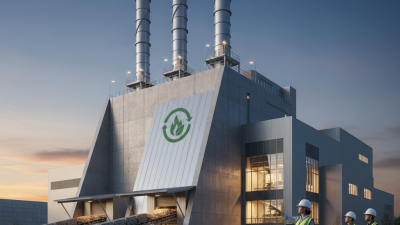
Choosing the best Garbage Incinerators in 2026 requires more than comparing purchase prices. Modern facilities must manage changing waste streams, strict emissions targets, energy recovery, and long-term operating costs. A machine that handles dry commercial waste may struggle with wet household refuse. That difference matters.
Dr. Marco J. Castaldi, a recognized waste-to-energy researcher, offers a useful principle: “Waste-to-energy should complement recycling, not compete with it.” This idea should guide every purchasing decision. The right incinerator should reduce residual waste while supporting responsible material recovery. It should not become an excuse for poor sorting practices.
This guide examines furnace design, thermal capacity, combustion stability, flue-gas treatment, ash handling, monitoring systems, and maintenance access. It also considers electricity generation, heat recovery, fuel consumption, and operator training. Look closely at real operating data, not only brochure promises. Ask for verified emission results, annual availability, spare-parts support, and references from comparable facilities.
Small details reveal practical quality. Can technicians reach the inspection doors safely? Does the system remain stable when waste moisture rises after heavy rain? Are sensors protected from dust and heat? These questions are easy to overlook.
No buying checklist is flawless. Local waste composition can change quickly. Budget forecasts can also prove optimistic. Therefore, decision-makers should test assumptions using independent engineering reviews and realistic lifecycle models. The best Garbage Incinerators are not simply the largest or newest. They are systems that fit the waste, workforce, infrastructure, and environmental responsibilities of the site.
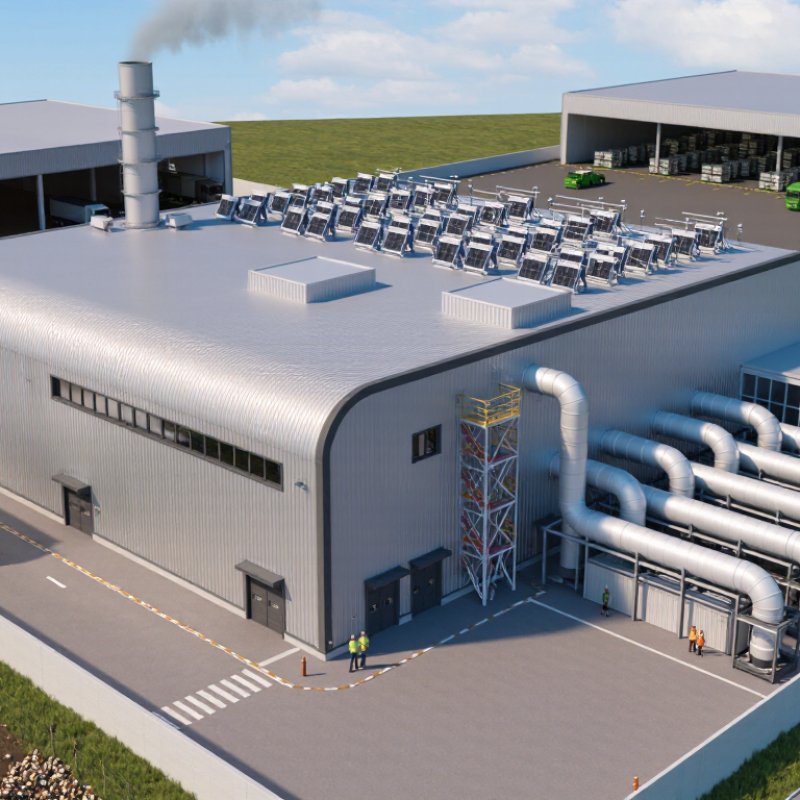
How to Choose the Best Garbage Incinerators in 2026?
Choosing an incinerator starts with identifying the waste, not browsing equipment catalogs. Separate food waste, paper, plastics, textiles, medical waste, and wet sludge. Each category burns differently. Moist food waste may reduce combustion temperature. Plastics can release challenging emissions if the chamber and treatment system are unsuitable. Record the waste composition over several weeks, including ash, moisture, and unusual materials. One sampling day is rarely enough.
Measure daily volume and peak volume separately. A facility producing eight cubic meters daily may generate twelve after markets or holidays. Estimate waste weight too, because volume changes after compaction. Then match the required hourly throughput with realistic loading cycles. Do not choose capacity from average figures alone. Allow space for startup, maintenance, and unexpected surges. Oversizing can waste fuel and reduce operating efficiency, while undersizing creates queues and incomplete combustion. A neat spreadsheet can still mislead.
Tips: Weigh representative loads. Test moisture and heating value when possible. Ask an experienced engineer to review the data and confirm chamber size, residence time, feeding method, ash handling, and emission controls. Check whether the proposed system fits local environmental requirements and operator training. Keep records after installation. Real operating data may show that your original assumptions were too optimistic. That is useful, not embarrassing. Start with measured waste, then select capacity.
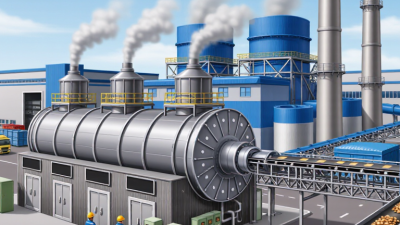
Define the waste type, measure the daily waste volume, and select an incinerator with enough rated capacity for the required operating schedule.
Planning basis: The chart assumes 16 operating hours per day, 85% operating availability, and a 20% capacity reserve. Required rated capacity is calculated as daily waste volume × 1.20 ÷ 16 ÷ 0.85. Actual selection should also consider moisture content, heating value, ash generation, emissions regulations, and waste pretreatment.
Choosing an incinerator starts with waste composition, not brochure claims. Grate systems suit mixed municipal waste with changing moisture and particle sizes. Rotary kilns handle bulky, sticky, or difficult industrial waste more steadily. Fluidized-bed systems can achieve strong mixing, but they usually require more uniform, prepared fuel. Pyrolysis and gasification may reduce oxygen use, yet their control systems are more demanding.
Combustion performance depends on temperature, residence time, turbulence, and oxygen distribution. A stable chamber often operates above 850°C, but temperature alone proves little. Operators should examine carbon monoxide, unburned carbon, excess oxygen, and flue-gas variation. Watch the ash. Dark, glowing ash can indicate incomplete burnout. Excessive oxygen may cool the furnace and waste energy. Poor mixing creates cold pockets, even when the display looks impressive.
Energy recovery also matters. Steam output, corrosion resistance, and downtime reveal practical value. A well-designed heat exchanger can produce useful power, but wet waste lowers efficiency sharply. Emission-control equipment must match the fuel and local requirements, with continuous monitoring and documented maintenance. I would request independent test data under realistic loads, not only ideal laboratory results. No single technology wins every site. My own comparison would still leave uncertainty around seasonal waste changes, because real feedstock rarely behaves perfectly.
When choosing a garbage incinerator, examine emissions before capacity or price. UNEP’s Global Waste Management Outlook 2024 projects municipal waste will reach 3.8 billion tonnes annually by 2050. Control quality will matter more.
Use the EU Joint Research Centre’s 2019 Waste Incineration BAT conclusions as a technical benchmark. They identify dust BAT-AELs commonly ranging from 2–5 mg/Nm³. Dioxin limits are also extremely low, often around 0.01–0.08 ng I-TEQ/Nm³. Ask for independently verified test results, not only supplier guarantees. Check continuous monitoring for oxygen, carbon monoxide, nitrogen oxides, acid gases, mercury, and particulate matter. Dioxins usually require periodic laboratory sampling. Calibration records matter.
Look for staged combustion, stable furnace temperatures, automatic interlocks, and negative furnace pressure. These features reduce incomplete combustion and prevent contaminated air escaping. Ash systems should be enclosed, cooled, and fitted with dust suppression. Fire detection, emergency shutdowns, access control, and clear maintenance isolation procedures are essential. EN 746-2 and ISO 45001 provide useful safety references, although neither replaces local permitting requirements. A low purchase price may hide expensive reagent use and maintenance. That assumption deserves challenge. I would also question designs offering perfect emission guarantees without raw monitoring data, failure procedures, or operator training records. No design is perfect. Reliability is demonstrated during faults, not only during commissioning.
Evaluate Energy Recovery, Operating Costs, and Maintenance Needs
The best garbage incinerator is not always the one producing the most electricity. The useful question is where recovered energy will go. The U.S. Environmental Protection Agency reports that municipal waste combustion can generate about 550 kilowatt-hours per ton of waste. However, electricity-only systems often recover less value than combined heat and power systems. The European Commission’s Waste Incineration BREF indicates that combined heat and power can reach much higher overall efficiency, sometimes above 60%. Local heat demand matters greatly.
Operating costs deserve a full lifecycle review. Check fuel consumption, labor, reagent use, ash handling, and emissions monitoring. The World Bank projects global municipal waste could reach 3.40 billion tonnes annually by 2050. That growth may support larger facilities, but oversized equipment can operate below its efficient load. This mistake is easy to miss. Ask for performance data from waste with similar moisture, density, and composition. A brochure cannot replace operating records.
Tips:
Inspect corrosion protection around boilers, grates, and flue-gas equipment. Request planned maintenance hours and spare-parts costs. The European Commission identifies corrosion, deposits, and air-pollution-control equipment as important maintenance concerns. Digital monitoring can detect unusual temperature changes early, yet sensors also require calibration. Review five-year maintenance assumptions with independent engineers. Real plants are less obedient than spreadsheets.
Choosing the best garbage incinerator in 2026 requires more than comparing capacity and purchase price. A reliable supplier should understand your waste composition, daily volume, moisture levels, and operating site. During evaluation, ask for commissioning procedures, operator training, maintenance schedules, and documented emissions testing. Request clear records from comparable installations. A polished brochure is not proof. The real test begins after installation.
Long-term compliance support deserves careful attention. Confirm whether the supplier assists with permit documents, monitoring plans, inspections, and changing environmental requirements. Ask how often technicians visit the site and how quickly they provide remote support. The contract should define response times, spare-part availability, software updates, and staff retraining. Include support for ash handling and equipment shutdowns. Vague promises create expensive gaps.
Site references can reveal practical weaknesses. Speak with operators, not only sales representatives. Ask about unplanned shutdowns, sensor failures, fuel use, and delayed parts. Check whether emissions data is stored securely and reviewed by qualified personnel. I have seen evaluations focus heavily on initial efficiency while overlooking training turnover. That choice can weaken performance within months. A supplier that welcomes independent testing shows stronger professional confidence. Still, no supplier should be trusted without reviewing technical records, service terms, and realistic operating limits.
| Evaluation Dimension | Practical Benchmark or Technical Fact | Why It Matters | Supplier Evidence to Request | Recommended Decision |
|---|---|---|---|---|
| Waste Compatibility | Confirm the waste type, moisture content, lower heating value, ash content, chlorine content, and expected daily volume. Municipal solid waste, clinical waste, hazardous waste, sludge, and agricultural residues require different designs. | A system designed for the wrong waste composition may experience unstable combustion, excessive auxiliary-fuel use, corrosion, or non-compliant emissions. | Request a written waste-acceptance specification, laboratory analysis requirements, mass and energy balance, and documented performance results for comparable waste characteristics. | Mandatory Verification |
| Incinerator Configuration | Moving-grate systems are commonly used for heterogeneous municipal waste. Rotary kilns provide broader flexibility for difficult or hazardous waste. Fluidized-bed systems generally require more uniform and prepared feedstock. Batch modular units suit smaller or intermittent loads. | The combustion configuration affects feed preparation, operating labor, throughput stability, ash quality, and maintenance requirements. | Ask for a technology-selection report comparing at least two suitable configurations using the site's actual waste data and operating schedule. | Match to Feedstock |
| Combustion Performance | For waste incineration, operating conditions commonly include a minimum combustion-gas temperature of 850°C for at least 2 seconds; waste containing more than 1% halogenated organic substances may require at least 1,100°C under European requirements. | Stable temperature, residence time, turbulence, and oxygen control support complete combustion and reduce carbon monoxide, unburned carbon, and dioxin formation. | Require guaranteed temperature and residence-time data, automatic combustion-control logic, startup and shutdown procedures, and a performance-test protocol. | Include in Contract |
| Air-Pollution Control | A complete system may require particulate removal, acid-gas control, nitrogen-oxide control, activated-carbon injection, and continuous or periodic emissions monitoring, depending on local regulations and waste composition. | Combustion equipment alone does not determine compliance. Flue-gas treatment and monitoring normally represent a major part of lifecycle cost and regulatory risk. | Request a process-flow diagram, pollutant-removal guarantees, reagent-consumption estimates, filter specifications, monitoring points, and emergency bypass controls. | Do Not Omit |
| Emissions Verification | Typical regulated parameters may include particulate matter, carbon monoxide, nitrogen oxides, sulfur dioxide, hydrogen chloride, hydrogen fluoride, mercury, heavy metals, and dioxins or furans. Exact limits depend on the jurisdiction and permit. | Meeting one jurisdiction's limits does not automatically satisfy another jurisdiction's requirements or permit conditions. | Verify independent stack-testing capability, calibration procedures, certified laboratories, continuous-emission-monitoring arrangements, and a plan for permit renewal support. | Regulatory Check |
| Energy Recovery | Heat can be recovered as hot water, steam, or electricity. Actual output depends on waste heating value, moisture, boiler efficiency, operating hours, corrosion control, and the availability of a heat or power off-taker. | Energy recovery can improve project economics, but overstated output guarantees may create financial and operational risks. | Request a site-specific energy balance showing waste input, parasitic electricity use, steam or power output, annual availability, and assumptions for seasonal waste variation. | Validate Assumptions |
| Availability and Maintenance | Planned shutdowns, refractory replacement, grate or kiln maintenance, boiler cleaning, filter replacement, crane service, and ash-system maintenance must be included in the operating plan. | High theoretical capacity is not useful if the plant has frequent unplanned outages or lacks locally available spare parts and trained technicians. | Ask for a lifecycle maintenance schedule, critical-spares list, expected annual availability calculation, mean-time-to-repair data, and response times for technical support. | Prioritize Reliability |
| Bottom Ash and Fly Ash | Incineration produces bottom ash and air-pollution-control residues. Their quantity, classification, testing frequency, stabilization method, and disposal or recovery route depend on the waste and local rules. | Residue management affects permitting, transport, worker safety, disposal cost, and the project's long-term environmental liability. | Require an ash mass balance, sampling plan, leachability-testing method, storage design, handling procedures, and documented disposal or recovery pathways. | Plan Before Purchase |
| Supplier Compliance Support | Long-term support should cover permitting documents, commissioning tests, operator training, emissions reporting, software updates, inspections, corrective actions, and regulatory-change reviews. | Compliance is an ongoing operational responsibility rather than a one-time equipment-delivery event. | Obtain a multi-year service scope with named deliverables, response-time commitments, training hours, reporting templates, audit assistance, warranty terms, and escalation procedures. | Contractual Requirement |
| Independent Verification | Performance claims should be confirmed through witnessed factory tests, site acceptance tests, certified stack testing, instrument calibration, and measurement methods recognized by the applicable authority. | Independent verification reduces the risk of relying solely on supplier-generated data or non-comparable reference projects. | Define acceptance criteria, test conditions, sampling duration, measurement uncertainty, failure remedies, retesting rights, and responsibility for third-party testing costs. | Use Independent Testing |
| Total Cost of Ownership | Evaluate capital cost together with fuel, electricity, reagents, water, labor, maintenance, ash disposal, emissions monitoring, insurance, permitting, and decommissioning costs. | The lowest purchase price may result in higher operating costs or insufficient pollution-control capacity. | Request a transparent 15-to-20-year lifecycle-cost model with sensitivity analysis for waste volume, moisture, reagent prices, energy revenue, labor, outages, and disposal fees. | Compare Lifecycle Cost |
| Supplier Due Diligence | Assess legally verifiable project references, financial stability, engineering resources, quality systems, cybersecurity controls, local service capacity, and the availability of replacement components. | A technically sound plant can still underperform if the supplier cannot provide parts, software support, documentation, or corrective action over its service life. | Request anonymized reference data, audited quality documentation, support-team qualifications, spare-parts lead times, software-maintenance terms, and a clear responsibility matrix. | Complete Before Award |