- Home
- About Us
- Products
- Solution
- Video
- Project Case
- News
- FAQ
- Contact Us
Inquiry
Form loading...
Global buyers need more than a low-cost answer when evaluating China’s Tire Disposal solutions. They need safe handling, reliable processing, and evidence that each step is controlled. The right partner should understand tire collection, sorting, transport, recycling, and responsible material recovery. It begins with the details.
In practical projects, discarded tires may arrive wet, mixed with steel, or covered in soil. These conditions affect storage, equipment performance, and final product quality. Not every facility handles them equally well. A complete assessment should examine production capacity, fire prevention, worker safety, and environmental management. Reliable providers can explain their process clearly, from incoming tire inspection to rubber crumb, recovered steel, or other outputs. Clear records matter. They support trust.
China’s recycling industry offers several approaches, including mechanical shredding, rubber granulation, and approved thermal processing. Each option has different equipment needs, operating costs, and environmental controls. Buyers should match the solution with local demand and legal environmental requirements in the destination market. The best supplier is not always the largest one. Sometimes, a smaller factory provides better communication and more careful quality control. That gap matters.
For buyers, due diligence should include factory videos, technical specifications, sample testing, certifications, and recent customer references. Ask how tires are weighed, stored, processed, and documented. Review maintenance plans and spare-parts support before signing an agreement. Confirm that shipping documents and product descriptions remain accurate. Small details prevent expensive misunderstandings.
A strong sourcing decision combines technical knowledge with realistic expectations. Still, no Tire Disposal project is perfect. I have seen promising proposals weaken because delivery schedules were too optimistic. That is why honest limitations deserve attention, not concealment. The following guide examines practical China-based solutions for global buyers seeking safer, clearer, and more dependable results.
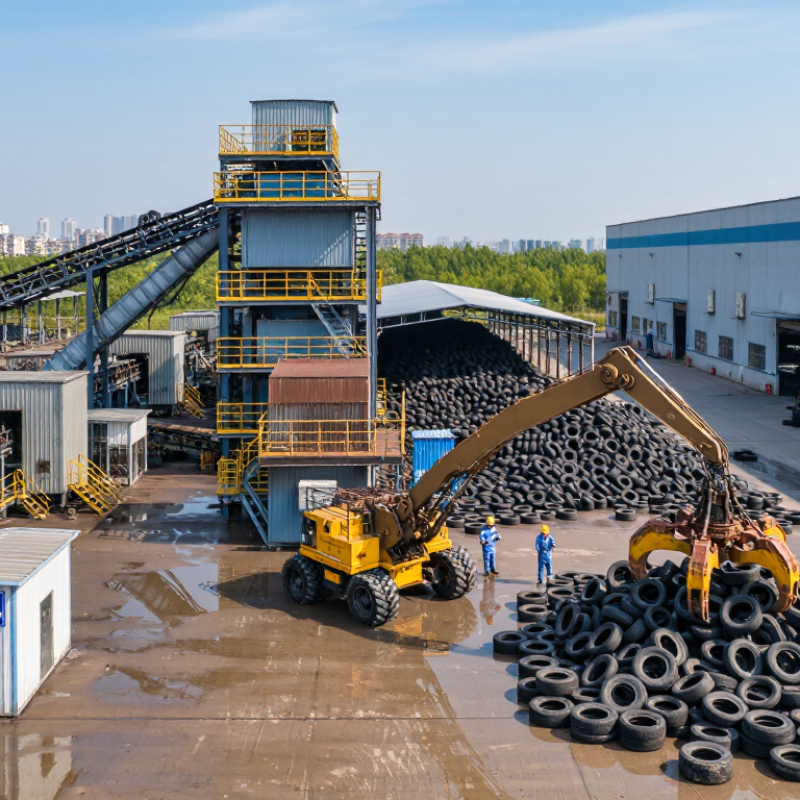
China offers several tire disposal solutions for global buyers, but the right choice depends on tire condition, volume, and end-use requirements. The China Association of Circular Economy estimated that China generates over 300 million waste tires annually. Retreading remains suitable for selected truck and bus casings. It extends service life while using fewer raw materials. However, not every casing qualifies. Tread damage, age, and internal separation must be inspected carefully.
Mechanical recycling is widely available. Shredders, granulators, and magnetic separators produce rubber chips, granules, steel, and fiber. These materials can support sports flooring, molded products, asphalt modification, and construction applications. The World Business Council for Sustainable Development has reported that more than one billion tires reach end of life globally each year. This supports strong demand for consistent recycled materials. Buyers should request particle-size records, steel removal rates, moisture data, and batch traceability.
Chemical recovery provides another option. Controlled pyrolysis can produce recovered carbonaceous material, oil fractions, and steel. It requires permitted equipment, emission controls, stable heating, and documented waste handling. Quality may vary when tires contain excessive dirt, textile fiber, or mixed rubber compounds. That part is often underestimated. China’s tire recycling sector is improving, yet supplier claims still need independent verification. A practical audit should examine feedstock records, laboratory certificates, production videos, and shipment samples before signing a long-term contract. Not every low-cost solution is a reliable one.
| Tire Disposal Solution | Primary Process | Typical Output | Indicative Capacity | Suitable Feedstock | Main Applications | Key Purchasing Considerations |
|---|---|---|---|---|---|---|
| Mechanical Tire Shredding | Tires are cut and torn into chips using primary and secondary shredders. Steel and textile can be separated with magnetic and air-separation systems. | Tire chips Separated steel Textile fiber | Approximately 1–20 tonnes per hour, depending on tire size, equipment configuration, and required particle size. | Passenger-car tires, truck tires, off-the-road tires, and mixed end-of-life tires. | Alternative fuel preparation, civil engineering fill, drainage layers, and feedstock for further processing. | Check knife durability, overload protection, feeding system, dust control, discharge particle size, and maintenance requirements. |
| Rubber Crumb Production | Shredded tires undergo granulation, screening, magnetic separation, and fiber removal to produce rubber granules or powder. | Rubber granules Rubber powder Recovered steel | Approximately 0.5–10 tonnes per hour; final capacity depends on target particle size and whether the system operates at ambient temperature. | Pre-shredded or whole end-of-life tires with controlled contamination levels. | Rubber-modified asphalt, sports surfaces, playground flooring, molded products, mats, and construction materials. | Specify particle-size distribution, steel and fiber residue limits, screen type, energy consumption, and quality-control equipment. |
| Ambient-Temperature Grinding | Rubber is ground at or near room temperature after steel and fiber separation. Multiple milling and screening stages create fine rubber powder. | Fine rubber powder Rubber granules Steel wire | Common commercial configurations range from approximately 0.3–5 tonnes per hour for fine powder production. | Clean tire-derived rubber, especially passenger-car and truck tire rubber prepared by prior shredding. | Rubber products, asphalt modification, sealants, flooring, coatings, and composite materials. | Evaluate powder fineness, throughput at the requested mesh size, heat generation, noise level, dust filtration, and screen replacement cost. |
| Cryogenic Rubber Grinding | Rubber is cooled with liquid nitrogen or another low-temperature method, becoming brittle before impact grinding and classification. | Fine rubber powder Low-fiber rubber particles Recovered steel | Capacity varies significantly with powder fineness and cooling configuration; industrial systems are commonly designed for continuous processing. | Pre-cleaned tire rubber requiring fine, relatively uniform particles and improved separation characteristics. | High-quality rubber compounds, specialty coatings, precision molded products, and selected polymer applications. | Assess liquid-nitrogen consumption, operating cost, powder quality, cryogenic safety systems, insulation, and local gas-supply availability. |
| Tire Pyrolysis | Rubber tires are thermally decomposed in an oxygen-limited reactor. The process generally requires gas cleaning, condensation, steel removal, and residue handling. | Pyrolysis oil Recovered carbon-rich solid Steel Non-condensable gas | Common project designs range from approximately 10–100 tonnes per day per processing line, subject to reactor design and feedstock preparation. | Whole or shredded end-of-life tires, preferably with consistent moisture, size, and contamination control. | Recovery of secondary raw materials and energy products, subject to applicable quality, emissions, and waste-management requirements. | Review continuous or batch operation, emission-control technology, product testing, fire and explosion protection, residue classification, and permitting responsibilities. |
| Thermal Desorption and Devulcanization | Controlled heat and mechanical or chemical treatment reduce the cross-linked structure of vulcanized rubber without fully decomposing it. | Devulcanized rubber Reclaim rubber Recovered steel | Capacity depends on the material formulation and desired devulcanization degree; pilot testing is normally required before scale-up. | Clean rubber granules or powder from passenger and truck tires. | Partial replacement of virgin rubber in selected molded products, mats, hoses, and rubber compounds. | Confirm reclaimed-rubber consistency, tensile properties, odor control, additives, energy use, and compatibility with the buyer's formulation. |
| Tire-Derived Fuel Preparation | Tires are shredded or processed into specified-size tire-derived fuel, with removal or management of excess steel and other contaminants. | Tire-derived fuel chips Recovered steel | Approximately 2–30 tonnes per hour for shredding and fuel-preparation systems, depending on chip size and separation requirements. | Mixed end-of-life tires suitable for approved industrial combustion systems. | Cement kilns, industrial boilers, and other facilities specifically permitted to use alternative solid fuels. | Confirm end-user fuel specifications, calorific value, moisture, chlorine content, steel percentage, storage safety, and transport regulations. |
| Integrated Tire Recycling Line | Combines tire debeading, shredding, granulation, magnetic separation, fiber separation, screening, and optional fine grinding or downstream processing. | Rubber granules Rubber powder Steel Textile fiber | Approximately 1–20 tonnes per hour for many commercial configurations, with capacity determined by the final product and number of processing stages. | Mixed passenger-car, truck, and commercial vehicle tires collected through organized waste-tire channels. | Multi-product recycling plants serving rubber-product manufacturers, construction projects, and material recovery operations. | Consider layout, automation level, spare parts, installation conditions, worker safety, dust and noise control, commissioning support, and after-sales service. |