Inquiry
Form loading...

Top Car Tire Disposal Solutions for Global Buyers?

Car Tire Disposal is no longer a simple hauling task for global buyers. It is a purchasing decision involving safety, traceability, recovery technology, and environmental performance. Used tires may arrive as whole units, shredded rubber, crumb rubber, or processed materials. Each form requires different storage, handling, transport, and quality checks.

Dr. Costas Velis, a waste-management researcher at the University of Leeds, has emphasized, “There is no single solution to waste.” That insight matters here. A responsible supplier should explain whether tires are reused, retreaded, mechanically processed, or converted through controlled recovery systems. Buyers should request facility records, processing photographs, material specifications, sampling methods, and recent third-party test results. A clean warehouse floor is useful evidence, but it proves little alone.

Details matter. Ask how steel wires are separated, how moisture is controlled, and how rubber particle size is measured. Confirm the destination of fibers, metals, and residual materials. Review shipping documents and local compliance requirements before any contract is signed. Rules differ between regions, and assumptions create expensive delays.

No supplier is perfect. Neither is every buyer’s checklist. Some solutions may appear efficient but perform poorly under real operating conditions. A trial shipment can reveal contamination, inconsistent granulation, or weak packaging. That small test may prevent a much larger mistake.

This guide compares practical Car Tire Disposal solutions for international buyers. It focuses on credible evidence, measurable output, and responsible cooperation. The goal is not the cheapest route. It is a dependable recovery pathway that remains transparent from collection to final use.
Top Car Tire Disposal Solutions for Global Buyers?

Understanding Global Car Tire Disposal Requirements

Global car tire disposal requires more than finding a recycling facility. The World Business Council for Sustainable Development’s Tire Industry Project estimates that about one billion end-of-life tires arise worldwide each year. That volume creates uneven collection, storage, and processing standards. A tire accepted as reusable in one market may be classified as waste elsewhere.

Global buyers should verify local waste codes, transporter permits, storage limits, and approved treatment methods before signing contracts. International shipments may also require documentation under the Basel Convention and national waste regulations. Clear records should identify tire origin, quantity, condition, destination, and final processing route. Small details matter. Wet tires can hold stagnant water, while stacked tires increase fire risks.

Material quality also affects disposal costs. Soil, metal parts, excessive moisture, and mixed rubber can reduce recovery value. The European Tyre and Rubber Manufacturers’ Association reported that Europe generated roughly 3.3 million tonnes of end-of-life tires annually, with recovery rates above 90% in recent reporting. However, regional figures should not be copied blindly. Reporting methods differ, and some data rely on estimates.

A practical supplier audit should include site photographs, weighbridge records, fire controls, and downstream processor evidence. Certificates help, but they are not proof alone. This is where many purchasing plans fail. Requirements should be reviewed annually because regulations, transport rules, and recovery capacity change.
Sorting and Preparing Used Tires for Safe Handling

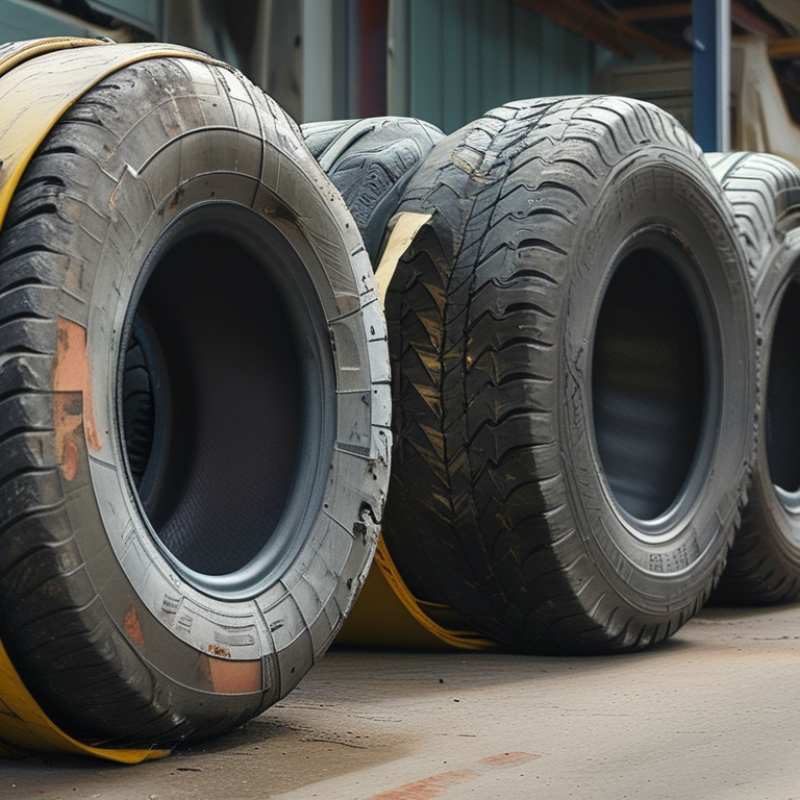
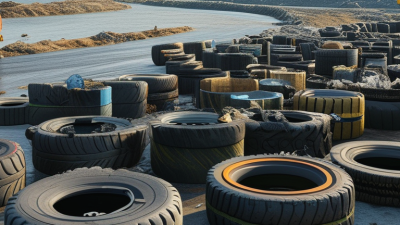
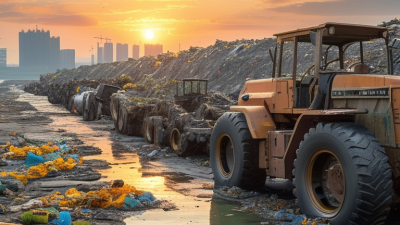
Used-tire disposal begins long before loading a truck. At collection points, workers inspect each tire under clear lighting. They record size, tread condition, visible damage, and contamination. Tires are separated into reusable casings, retread candidates, and material-recovery stock. A tire with exposed steel, deep cuts, or chemical residue needs controlled handling. Do not stack questionable tires with clean ones. This simple mistake can spread risk.

Sorting works better on a dry, level surface with drainage nearby. Remove loose stones, mud, and trapped objects before weighing or packing. Check for rims, valves, and embedded metal parts. Rims may require separate processing and safer lifting equipment. Workers should wear cut-resistant gloves, eye protection, sturdy footwear, and high-visibility clothing. Tire piles must remain stable, accessible, and away from ignition sources. Keep records for quantity, category, inspection date, and destination. Clear labels help receiving teams verify the load without guessing.

For global buyers, preparation should match the agreed transport and processing route. Use clean, secure bundles or suitable containers that prevent shifting. Avoid over-compressing tires when it could damage packaging or create unstable loads. Moisture deserves attention; wet tires become heavier and can hide debris. Rushed inspections still happen. I have seen a clean-looking stack conceal nails and a cracked rim. A second visual check is worth the minutes. Photos, weight tickets, and inspection notes improve traceability between collection, shipment, and final processing.

Comparing Recycling, Reuse, and Energy Recovery Options

For global buyers, tire disposal is not a single-track decision. Recycling converts end-of-life tires into rubber granules, steel, and textile fiber. These materials can support flooring, molded products, and road applications. The U.S. Tire Manufacturers Association reported about 290 million scrap tires generated annually in the United States. Its recent reports also show that beneficial use has exceeded 70%. However, collection quality and local processing capacity still determine the real result.

Reuse can extend tire life through retreading, especially for commercial vehicles with suitable casings. The European Tyre and Rubber Manufacturers’ Association has reported that millions of used tires enter European collection systems every year. Retreading usually requires less raw material than producing a new tire. Yet, safety inspection, casing condition, and transport distance matter greatly. A cheap reuse route may create more emissions if tires travel thousands of kilometers. That assumption can fail.

Energy recovery uses tires as a fuel substitute in controlled industrial facilities. The World Business Council for Sustainable Development has estimated that roughly one billion tires reach end-of-life globally each year. Energy recovery can reduce fossil fuel demand, but it does not preserve material value. Recycling generally offers stronger circularity, while energy recovery may suit contaminated or damaged tires. The best option depends on local energy prices, emission controls, and buyer specifications.

Tips: Ask for traceability records, moisture limits, and material recovery rates. Compare transport emissions with processing benefits. Request independent testing. Small gaps in data matter. Even experts sometimes overestimate recycling yields. A practical pilot shipment can expose hidden sorting and contamination problems before a larger contract.

Top Car Tire Disposal Solutions for Global Buyers? - Comparing Recycling, Reuse, and Energy Recovery Options

Evaluation Dimension Mechanical Recycling Reuse and Retreading Energy Recovery
Main objective Convert end-of-life tires into secondary raw materials. Keep usable tire casings in service for an additional operating cycle. Recover the tire’s stored energy as a substitute for conventional fossil fuels.
Typical outputs Rubber granules or powder, recovered steel, and textile fractions. Retreaded tires, reusable casings, or components suitable for secondary applications. Thermal energy, process heat, and mineral content incorporated into suitable industrial products.
Material recovery potential High for steel and rubber when tires are properly shredded, separated, and processed. Very high product-life extension potential because most of the casing remains in use. Low material recovery compared with recycling; the primary benefit is energy substitution.
Condition of incoming tires Accepts damaged, worn, mixed, or non-retreadable tires after removal of prohibited contaminants. Requires sound casings with acceptable structure, limited damage, and sufficient remaining casing strength. Can handle tires unsuitable for reuse, subject to plant specifications and local permits.
Pre-processing requirements Sorting, bead or sidewall preparation, shredding, granulation, magnetic separation, and screening. Inspection, shearography or equivalent testing where applicable, buffing, repair, bonding, curing, and final inspection. Size reduction or whole-tire preparation, removal of unsuitable materials, and controlled feeding.
Indicative energy characteristic Uses electricity for size reduction and separation; energy demand depends on target particle size. Generally avoids manufacturing a completely new tire, reducing demand for new raw materials and production energy. Tire-derived fuel commonly has a high heating value of approximately 28–35 MJ/kg, depending on composition and moisture.
Environmental profile Reduces demand for virgin rubber and steel; emissions depend on electricity source, dust controls, and process efficiency. Usually offers the greatest material-life extension when the casing is safe and technically suitable for retreading. Displaces part of the fossil fuel mix but produces regulated combustion emissions and does not preserve most rubber as material.
Best-fit buyer profile Buyers needing rubber granules, recovered steel, molded products, asphalt modifiers, or civil-engineering materials. Fleet operators, tire distributors, and markets with established inspection and retreading standards. Industrial facilities with approved co-processing or waste-to-energy systems and reliable tire-derived-fuel demand.
Logistics considerations Shredding can improve transport density, but separated rubber, steel, and textile streams may require different destinations. Whole tires and casings require substantial storage volume; matching casing supply with regional demand is important. Whole tires or chips can be bulky; delivery specifications typically cover size, moisture, wire content, and contamination.
Quality-control priorities Particle-size distribution, steel and textile contamination, moisture, ash, and consistency of rubber content. Casing age, structural integrity, tread bonding, dimensional conformity, load rating, and final safety inspection. Heating value, moisture, chlorine and sulfur content, metal content, particle size, and feed-system compatibility.
Key limitations Capital-intensive equipment, noise and dust management, variable end-market prices, and contamination control. Not every casing is suitable; safety rules, technical standards, customer acceptance, and collection quality are critical. Requires stringent air-pollution controls, regulatory approval, compatible combustion equipment, and stable fuel demand.
Overall circularity ranking High Very High Moderate
Recommended priority Use when tires are not safe or suitable for continued service and stable recycled-material markets are available. Prioritize first when inspection confirms that the casing can safely support another service life. Use for residual tires that cannot be safely reused or economically recycled into materials.

Note: Performance, costs, emissions, accepted tire specifications, and legal requirements vary by country, facility design, electricity mix, transport distance, and end-market conditions. The heating-value range is indicative for typical passenger and truck tire-derived fuel and should be confirmed by laboratory testing.

Reference framework: International practices commonly reflect the waste hierarchy, applicable national end-of-life tire regulations, relevant retreading safety standards, and environmental permitting requirements for recycling and combustion facilities.

Selecting Certified Tire Disposal Partners Worldwide

Global buyers should treat tire disposal as a qualification process, not a price comparison. A certified partner should provide current environmental permits, site addresses, insurance evidence, and trained staff records. Ask which certification body issued each document. Then verify its scope and expiration date independently. A certificate can cover collection, but not processing. That distinction matters. Look for documented procedures for weighing, sorting, storage, fire prevention, and material recovery. During a site visit, inspect covered storage areas, drainage controls, loading equipment, and emergency plans. The details tell the real story. A clean website proves little.

Reliable partners also maintain chain-of-custody records from pickup to final treatment. Request sample manifests, receiving tickets, processing reports, and monthly weight reconciliations. Ask whether subcontractors are disclosed and audited. Global shipments need clear responsibility for customs documents, transport conditions, and destination requirements. The buyer should receive photographs, timestamps, and recovery evidence when appropriate. Reports should identify tire quantities, processing routes, and unexpected losses. Do not accept vague claims of “zero waste.” Real operations have rejects and delays. I still recommend a small pilot shipment before signing a long contract. It reveals communication gaps quickly, although it cannot replace a full audit. Recheck certificates annually. Evidence matters. Regulations and facility conditions change. Reliability requires evidence, not confidence alone.

Top Car Tire Disposal Solutions for Global Buyers

Selecting certified tire disposal partners worldwide requires evaluating proven end-of-life tire recovery routes, regulatory compliance, traceability, and environmental performance.

Benchmark data: European end-of-life tire management routes, reported by the European Tyre and Rubber Manufacturers’ Association for 2022. Regional results may vary according to local regulations, collection systems, and market demand.

Managing Shipping, Documentation, and Environmental Compliance

Global buyers need more than a low purchase price when selecting car tire disposal solutions. The shipping plan must match the material’s condition, quantity, and final treatment method. Separate tires by size, type, and contamination level before loading. Remove loose metal, soil, and unrelated waste. A clean cargo list reduces inspection delays.

Prepare a commercial invoice, packing list, purchase agreement, transport details, and accurate weight records. The product description should explain whether the tires are intended for reuse, retreading, material recovery, or another approved process. Confirm the correct customs classification with a qualified broker. Classification practices can differ between countries. Check import permits, carrier requirements, and destination restrictions before booking space. Do not rely on old paperwork.

Environmental compliance requires evidence, not promises. Ask the receiving facility for operating permits, treatment capabilities, and acceptance criteria. Keep photographs, inspection notes, weighbridge tickets, and signed handover records. Some destinations require advance notifications or special movement documents for used tires. Verify these requirements with competent authorities and local specialists. Our first shipment looked complete, but one missing weight record caused avoidable questions. That mistake changed our process. Now, we review every document against the physical load before dispatch. Containers should remain dry, secure, and free from leaks. Tires must not be mixed with hazardous materials. A careful audit often protects both delivery schedules and environmental responsibility.