Inquiry
Form loading...

How to Recycle Tires in 2026 for Global Buyers?

How to Recycle Tires in 2026 for Global Buyers? The answer begins with traceability, not price. Buyers must understand where tires are collected, how they are sorted, and which products they become. A low quotation can hide weak processing, inconsistent quality, or expensive transport problems.

Steve Russell, a former senior representative of the U.S. Tire Manufacturers Association, has emphasized, “The tire industry is committed to finding beneficial uses for scrap tires.” That principle remains practical in 2026. Reliable suppliers should provide collection records, processing descriptions, test results, and clear product specifications. Recycled rubber may become crumb rubber, playground surfaces, asphalt additives, molded products, or tire-derived fuel. Each use requires different dimensions, steel content, moisture limits, and contamination controls.

Ask difficult questions. Are whole tires accepted? How is fiber removed? Can the supplier repeat the same particle size every month? Request recent inspection reports and, where possible, arrange an independent factory audit. Buyers should also verify shipping documents, environmental permits, packaging strength, and destination-country requirements. Rules differ widely.

Recycle Tires projects are not always perfectly predictable. Seasonal supply can change. Machinery can stop. A sample may look cleaner than a full shipment. This is where many purchasing plans become too optimistic. Build inspection points into contracts, and test a small shipment before scaling orders. Experience suggests that communication matters as much as equipment. A dependable supplier admits limitations early. That honesty may prevent a costly mistake later.

How to Recycle Tires in 2026 for Global Buyers?

Map the Market: 1.5 Billion End-of-Life Tires Arise Each Year

How to Recycle Tires in 2026 for Global Buyers?

Map the Market: 1.5 Billion End-of-Life Tires Arise Each Year

Around 1.5 billion end-of-life tires emerge globally each year, according to estimates from the World Business Council for Sustainable Development’s Tire Industry Project. The figure includes passenger, truck, agricultural, and industrial tires. It is a market signal, not a perfect annual count. Collection systems differ widely between countries. That uncertainty matters.

For global buyers, recycling starts with material identification. A truck tire may contain over 20 kilograms of rubber, steel, and textile components. Clean, sorted casings usually support better processing outcomes than mixed loads. Buyers should request production dates, tire categories, moisture records, photographs, and independent inspection results. Small details matter. A wet container can damage value before processing begins.

The European Tyre and Rubber Manufacturers’ Association reports that Europe generates more than three million tonnes of end-of-life tires annually. Its data also shows established recovery routes, including retreading, material recycling, and energy recovery. These routes are not interchangeable. Crumb rubber requires different specifications from tire-derived aggregate or pyrolysis feedstock. The U.S. Environmental Protection Agency has also documented hundreds of millions of scrap tires generated domestically each year, showing the scale of regional supply.

Cross-border buyers must check waste-shipment rules, customs classifications, destination permits, and contamination limits before contracting. A low price can hide unusable tread, embedded soil, or incomplete paperwork. The 1.5-billion estimate is powerful, but it should be tested against local collection data, not accepted blindly.
Audit Suppliers Against the U.S. 71% Beneficial-Use Benchmark

How to Recycle Tires in 2026 for Global Buyers?

Audit Suppliers Against the U.S. 71% Beneficial-Use Benchmark

Global buyers should treat the U.S. 71% beneficial-use rate as an audit reference, not a universal legal requirement. It can reveal whether a supplier has a credible recovery system. However, each destination country may apply different definitions, permits, and reporting rules.

Request monthly input and output records. Compare delivered tire weights with recovered rubber, steel, fuel substitutes, or molded products. Ask for end-use evidence, including customer declarations, delivery records, site photographs, and processing dates. A reliable supplier should explain material losses clearly. Unexplained gaps deserve attention.

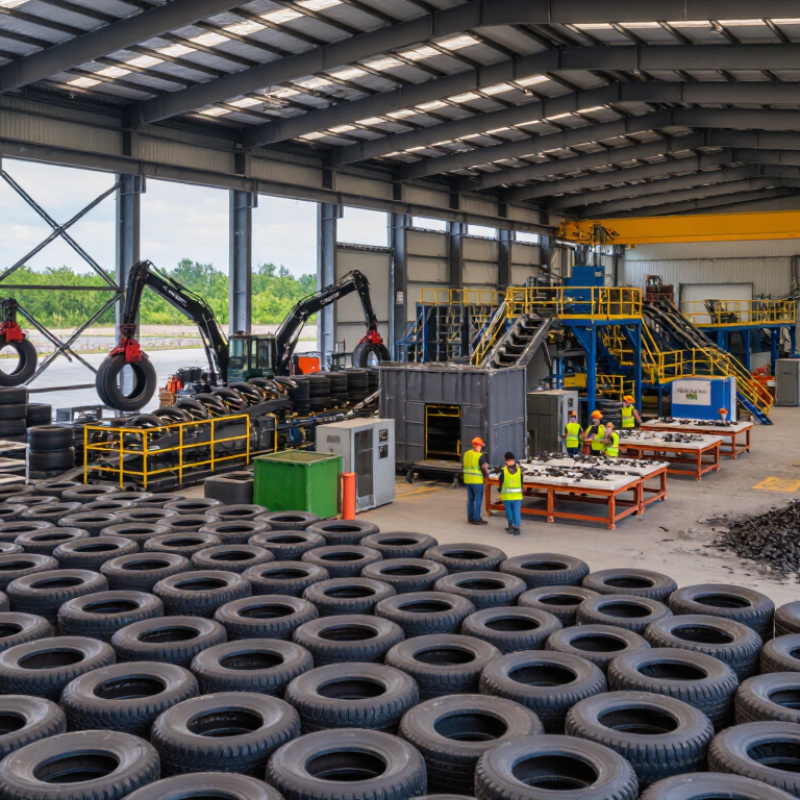
Inspect the facility when possible. Check storage areas, fire controls, sorting equipment, and contamination levels. Review scale calibration and sample testing procedures. In practical audits, paperwork often looks stronger than the physical operation. That is a warning sign. A spreadsheet can hide leakage.

Do not accept “zero waste” claims without measurable evidence. Calculate the beneficial-use ratio using consistent weight units and documented destinations. Separate reusable material from rejected residue. Then compare the result with the 71% benchmark and local requirements. I would also record uncertainties instead of forcing a clean score. Real supply chains are rarely perfect. Supplier performance should be reassessed after shipment data becomes available.

Choose Outputs: EU Data Shows 51% Material Recovery and 38% Energy Recovery

In 2026, global tire buyers should treat recycling as an output-selection decision, not a disposal transaction. EU data reports 51% material recovery and 38% energy recovery. These figures show two established pathways, with different commercial and environmental requirements. Material recovery turns tires into rubber granules, steel, and textile fractions. Energy recovery uses their controlled calorific value in approved industrial systems. Both require traceable collection and documented processing.

Numbers need context. Recovery rates can change with tire composition, sorting quality, and facility technology. A buyer purchasing rubber granules should request particle-size data, moisture levels, steel removal rates, and contaminant testing. For energy-related outputs, buyers should verify calorific value, emissions controls, permits, and delivery consistency. A clean warehouse floor and sealed packaging can prevent moisture problems during transport. Small details matter.

The 51% material recovery figure may encourage higher-value circular applications, but not every tire suits the same process. Some worn tires contain contamination or mixed materials that reduce usable output. The 38% energy recovery share remains relevant where material processing is technically difficult. It should not be treated as automatically superior or inferior. Buyers also need chain-of-custody records, audited weighing methods, and clear destination-country requirements. Data can look precise while hiding operational gaps.

How to Recycle Tires in 2026 for Global Buyers?

Choose outputs based on reported EU end-of-life tire treatment shares: material recovery leads at 51%, followed by energy recovery at 38%.

For global buyers, material recovery can provide outputs such as rubber granules, recovered steel, and textile fiber, while energy recovery uses tire-derived fuel. The remaining 11% represents other or separately reported treatment routes.

Data basis: EU end-of-life tire recovery figures; percentages are rounded.

Check 2026 Shipments Against Basel Codes and Import Permits

How to Recycle Tires in 2026 for Global Buyers?

For 2026 shipments, tire recycling begins with legal classification, not price. A used tire may be treated differently based on its condition, intended use, and destination rules. Buyers should compare the shipment with applicable Basel Convention waste codes and national definitions. The correct code depends on the material and movement. It should not be guessed from a commercial invoice alone.

Import permission must be confirmed before loading. Check requirements with authorities in the destination and transit countries. Some shipments may require prior informed consent, permits, movement documents, or approved treatment facilities. Keep the permit number, tire photographs, weight records, contracts, and inspection reports together. A clean spreadsheet helps, but it is not proof of compliance. The weak point is often an outdated permit.

Tips: Ask the supplier for tire-condition evidence. Separate reusable casings from damaged waste. Confirm the destination facility’s authorization in writing. Match invoice descriptions, customs codes, Basel classifications, and transport documents. Never rely on a broker’s verbal assurance alone. Requirements can change during 2026. Review them again before dispatch. Mistakes happen, especially when one shipment crosses several borders. Reliable buyers build time for correction, not just transport.

Approve Lots by Testing Rubber, Steel, Moisture, and Contamination

For global buyers, tire recycling begins before shipment: approve each lot with evidence, not optimistic descriptions. At the loading site, sample bales from different rows, including the center and edges. A single clean bale proves little. Label every sample with its lot number, date, source category, and gross weight. Photographs help, but they cannot replace physical testing.

Rubber testing should examine particle size, fiber content, and visible aging. A sieve check reveals oversized pieces, while hand sorting exposes textile fibers and road debris. Steel needs separate attention. Magnetic separation can estimate recovery, but a measured trial provides stronger evidence. Record steel weight before and after separation, then compare it with the agreed specification. Moisture can distort shipment weight and create storage problems. Use a calibrated moisture meter, then confirm doubtful readings through oven-drying. Do not test only the surface.

Contamination includes soil, plastic, wood, stones, and mixed waste. Weigh these materials separately and calculate their percentage against dry rubber mass. For large purchases, an independent inspector should witness sampling and seal retained samples. Those samples help when results disagree later. No test is perfect. Field readings can drift with operator skill, temperature, and uneven material. Buyers should repeat tests across several lots and review the method itself. Clear acceptance limits, rejection rules, and moisture adjustments should appear in the purchase contract.