- Home
- About Us
- Products
- Solution
- Video
- Project Case
- News
- FAQ
- Contact Us
Inquiry
Form loading...
Choosing a Waste To Energy Incinerator is an engineering decision, not merely a purchasing exercise. The right system must match local waste conditions, energy needs, operating skills, and environmental requirements. A plant designed for dry commercial waste may struggle with wet food waste or seasonal changes. That difference can affect combustion stability, power output, maintenance, and emissions performance.
Professor Nickolas Themelis, a respected waste-to-energy researcher, stated, “Waste-to-energy is a renewable energy source because municipal solid waste is continuously generated.” His observation highlights an important point: waste availability alone does not guarantee a successful facility. Buyers should examine waste composition, moisture content, heating value, daily capacity, and future supply. They should also assess the grate or furnace design, heat-recovery boiler, flue-gas treatment, ash management, and continuous emissions monitoring. Small details matter. A blocked feed system can stop an entire line.
Reliable selection requires evidence, not impressive brochures. Ask manufacturers for operating references, performance data, maintenance records, spare-parts plans, and independently verified emissions results. The proposal should explain how the Waste To Energy Incinerator will perform during start-up, low-load operation, shutdowns, and abnormal waste conditions. Compliance with applicable environmental and safety standards must remain non-negotiable.
No shortlist is perfect. Forecasts can be wrong. Waste streams can change faster than expected. A stronger evaluation therefore includes conservative assumptions, transparent risk analysis, and realistic lifecycle costs. The cheapest installation may become the most expensive choice when downtime, corrosion, staffing, and retrofit requirements are considered. This guide outlines the practical questions that can separate a durable energy asset from a costly disappointment.
How to Choose a Waste to Energy Incinerator?
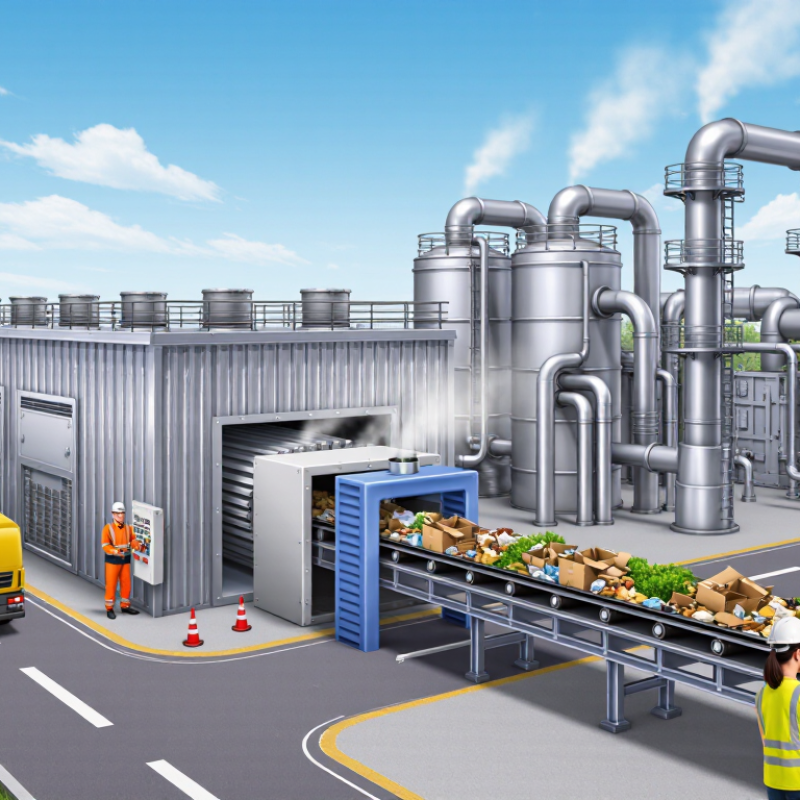
Understanding the process is essential before comparing an incinerator. Mixed waste enters a sealed bunker, where an overhead crane feeds a measured amount into the hopper. A moving grate carries the waste through the primary chamber. Controlled air supports combustion without creating unnecessary turbulence. The remaining ash drops into a water-filled extractor.
The heat boils water inside a boiler, producing steam for a turbine and generator. A well-designed unit controls temperature, oxygen, feed rate, and residence time continuously. The secondary chamber burns remaining gases at a higher temperature. This step needs careful monitoring. Poor control can reduce efficiency and increase unwanted emissions.
The flue gas then passes through filters, scrubbers, or catalytic equipment, depending on the waste composition and local requirements. Continuous monitors check dust, nitrogen oxides, acidic gases, and carbon monoxide. Ask for real operating data, not only laboratory results. Inspect the ash handling area, maintenance access, emergency systems, and operator training records. A reliable facility should explain its limits clearly.
No system is perfect. Wet waste can lower energy output, while oversized objects may interrupt feeding. I would also examine seasonal performance and unplanned shutdowns. A lower purchase price may hide higher maintenance costs. The best choice matches waste composition, required capacity, emission controls, and the site’s technical skills.
Use the following technical comparison to match the incinerator design with the waste composition, required capacity, energy objective, emission limits, and residue-management plan.
| Technology | Best-Suited Feedstock | Typical Combustion Conditions | How Energy Is Recovered | Typical Energy Performance | Main Residues | Key Selection Consideration |
|---|---|---|---|---|---|---|
|
Moving Grate Direct combustion of mixed waste on a continuously moving grate. |
Unsorted or partially prepared municipal solid waste with variable moisture, particle size, and calorific value. | Primary combustion zone commonly operates around 850–1,100°C. Complete combustion requires adequate residence time, turbulence, and oxygen. | Hot flue gas produces steam in a boiler. The steam can drive a turbine-generator and may also supply district or industrial heat. | Net electrical efficiency is commonly about 15–30%. Combined heat and power can achieve substantially higher overall energy utilization when a stable heat user is available. | Bottom ash, fly ash, boiler residues, air-pollution-control residues, and wastewater or reagent residues where wet treatment is used. | Usually the most practical option for large, continuous municipal waste flows. Requires robust flue-gas cleaning and reliable waste-feeding systems. |
|
Fluidized Bed Waste is burned in a hot bed of sand or another inert granular material. |
Refuse-derived fuel, solid recovered fuel, sewage sludge, and relatively uniform waste with controlled particle size and moisture. | Typically operates around 750–950°C, with strong mixing and high heat-transfer rates. Temperature depends on fuel characteristics and operating strategy. | Combustion heat generates steam for electricity, process heat, or combined heat and power. | Electrical performance is generally comparable to other steam-cycle systems, often around 15–30% net for electricity-only operation, depending on scale and steam conditions. | Bed ash, fly ash, air-pollution-control residues, and contaminants separated during fuel preparation. | Suitable when fuel preparation can provide consistent particle size and composition. Feeding oversized, wet, or highly variable waste can reduce stability. |
|
Rotary Kiln A slowly rotating refractory-lined chamber followed by a secondary combustion chamber. |
Hazardous waste, clinical waste, industrial residues, sludges, and mixed waste streams requiring flexible feeding. | The primary chamber commonly operates around 800–1,000°C, while the secondary chamber is often operated around 950–1,200°C to promote destruction of combustible gases. | Flue gas may be cooled through a waste-heat boiler to produce steam for electricity or useful heat, although some installations focus mainly on safe destruction. | Energy recovery is usually lower than for large municipal plants when throughput is small or waste has low calorific value. Performance depends strongly on feed quality and heat demand. | Bottom ash, slag, fly ash, air-pollution-control residues, and potentially hazardous residues requiring controlled handling. | Offers high feedstock flexibility, but generally has higher operating complexity and may require careful control of hazardous contaminants and combustion gases. |
|
Modular Grate Factory-built combustion modules installed individually or in parallel. |
Small to medium municipal waste streams, institutional waste, commercial waste, and locations with phased capacity requirements. | Commonly uses grate combustion at approximately 850–1,100°C, subject to waste composition, air distribution, and applicable regulations. | Heat can be transferred to hot water, thermal oil, or steam. Electricity generation is possible when the plant is large enough to justify a turbine system. | Electricity-only output is often less attractive at small scale. Direct heat or combined heat and power can improve total useful-energy recovery. | Bottom ash, fly ash, boiler residues, and air-pollution-control residues. | Useful where transport distances are long or waste quantities are moderate. Check module redundancy, maintenance access, and seasonal load variation. |
|
Pyrolysis or Gasification Thermal conversion with little or no direct oxygen in the primary reactor. |
Prepared, relatively homogeneous refuse-derived fuel, plastics, biomass fractions, or other controlled feedstocks. | Pyrolysis commonly occurs around 300–700°C without direct combustion air. Gasification commonly operates around 700–1,200°C with a controlled amount of oxygen or steam. | Produces combustible gas, oil, char, or synthesis gas. The gas may be burned in a boiler, engine, or turbine after cleaning. | Results vary considerably. Overall performance depends on feed preparation, gas cleaning, auxiliary fuel use, and the efficiency of the downstream power system. | Char or ash, tar or condensable compounds, fly ash, and residues from gas cleaning and wastewater treatment. | Requires strict feedstock control and advanced gas-cleaning systems. It should not be selected solely because it is described as a low-emission technology. |
|
Steam-Cycle Energy System The heat-recovery and power-generation section used after combustion. |
Suitable for combustion systems producing a stable, high-temperature flue-gas stream. | Boiler design must control corrosion, fouling, and high-temperature material exposure caused by chlorine, alkali metals, and other contaminants. | Boiler feedwater is converted to steam. A turbine-generator converts steam energy into electricity; extracted steam can provide useful heat. | Electricity output depends on waste lower heating value, boiler pressure and temperature, plant scale, condenser conditions, and internal power consumption. | Boiler ash, bottom ash, fly ash, and residues from flue-gas treatment. | Evaluate guaranteed steam conditions, annual availability, corrosion protection, cooling-water requirements, and the local market for electricity or heat. |
|
Flue-Gas Treatment System Emission-control equipment installed downstream of the boiler. |
Required for municipal, industrial, clinical, and hazardous waste combustion systems, with equipment selected according to the waste and permit limits. | Treatment can include rapid quenching, particulate removal, acid-gas neutralization, activated carbon injection, and nitrogen-oxide reduction. | Does not generate energy directly, but it protects the boiler, supports compliance, and affects auxiliary power, reagent use, and operating cost. | Common systems include bag filters or electrostatic precipitators for particles; dry, semi-dry, or wet scrubbers for acid gases; and SNCR or SCR for nitrogen oxides. | Fly ash, spent sorbent, activated carbon, scrubber slurry or salts, and wastewater-treatment residues where applicable. | Size the system using measured waste composition and local emission limits. Include continuous monitoring, reagent storage, bypass prevention, and residue disposal costs. |