China Best Waste to Energy Technology for Global Buyers?
Choosing China’s best Waste To Energy Technology requires more than comparing equipment prices or factory capacity. Global buyers need proven performance, transparent data, and support after installation. A reliable solution should match local waste composition, moisture levels, electricity demand, and environmental requirements. Mixed municipal waste behaves differently from food waste or refuse-derived fuel.
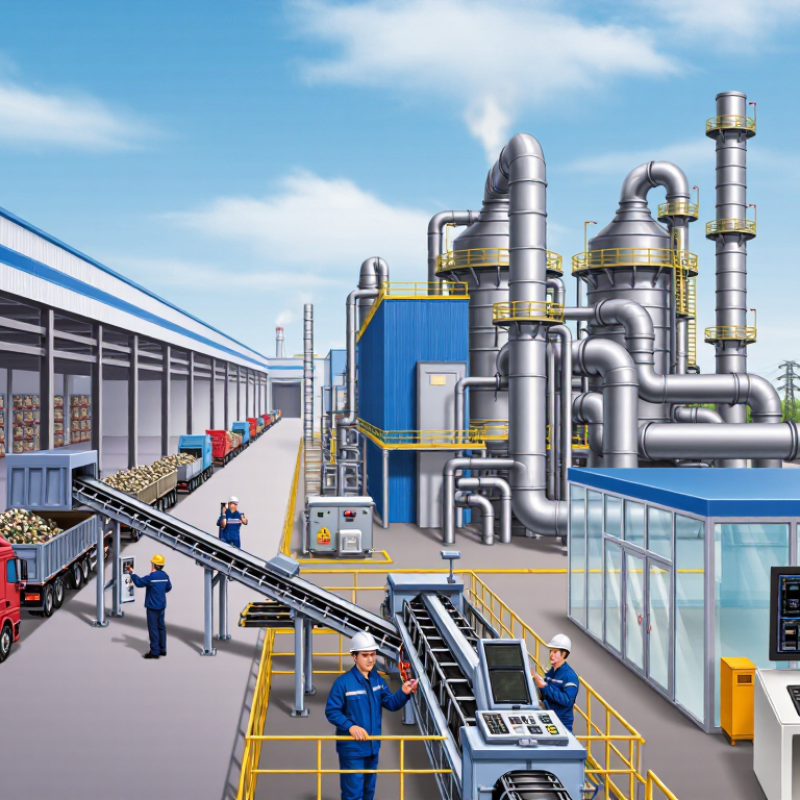
Experienced buyers usually examine the complete project, not only the furnace or gasifier. They review feeding systems, combustion control, flue-gas treatment, ash handling, energy recovery, and monitoring instruments. Site visits can reveal practical details, such as uneven waste feeding, maintenance access, and spare-parts storage. These small details matter during the fifth year of operation.
Chinese manufacturers offer varied project experience, from compact plants to large municipal facilities. However, no single system is the best choice for every country. Performance claims should be checked through operating references, independent testing, warranty terms, and clear commissioning records. Local grid conditions and permitting rules also deserve early attention. A low purchase price may hide higher maintenance costs.
This guide explores how global buyers can assess Waste To Energy Technology with technical discipline and realistic expectations. It considers efficiency, emissions control, durability, automation, service capability, and total lifecycle value. Some conclusions may remain imperfect because waste data is often incomplete. That uncertainty should be measured, not ignored. The strongest purchasing decision combines verified engineering, local adaptation, and a supplier willing to discuss weaknesses openly.
China’s WtE Scale: Over 1 Million Tonnes/Day of Incineration Capacity
China’s waste-to-energy sector has reached a striking scale.
Industry data compiled from the China Urban Construction Statistical Yearbook 2023 indicates more than 1 million tonnes per day of municipal waste incineration capacity. That figure reflects rapid facility construction, improved collection systems, and stronger urban waste policies. The World Bank’s What a Waste 2.0 report estimates global municipal waste could reach 3.4 billion tonnes annually by 2050. China’s operating experience therefore offers useful lessons for overseas buyers.
Scale is not enough.
A modern facility must maintain stable combustion, continuous flue-gas monitoring, and controlled residue handling. Operators also need reliable waste weighing, moisture analysis, and maintenance records. The International Energy Agency notes that waste energy recovery can support local power systems, but performance depends on feedstock quality and plant efficiency. High moisture waste can reduce heat output. That detail is often underestimated. Buyers should examine annual availability, net electricity generation, emission data, and ash treatment methods, rather than judging capacity alone. Some published capacity figures describe design limits, not actual daily throughput. That distinction deserves more attention.
Core Technology: 850–1,100°C Combustion and 550–700 kWh/Tonne Power
For global buyers evaluating Chinese waste-to-energy systems, furnace performance deserves close attention. A controlled combustion range of 850–1,100°C supports more complete burning of mixed municipal waste. The lower range may suit stable, drier feedstock. Wetter waste can require stronger air control and longer residence time. Operators should monitor oxygen levels, grate movement, and unburned carbon in ash. Small changes matter. Seasonal rain can reduce expected output.
The stated generation rate of 550–700 kWh per tonne also needs careful interpretation. It may indicate gross electricity, before internal consumption, or net electricity exported. These figures are not interchangeable. Fans, pumps, flue-gas treatment, and waste preparation consume power. A reliable assessment should use measured waste composition, lower heating value, and annual operating data. Buyers should request test conditions and results from several months.
Temperature alone does not prove safe or efficient operation. Stable combustion must work with heat recovery, emissions monitoring, and skilled maintenance. At 1,100°C, refractory wear and corrosion may increase with difficult ash chemistry. At 850°C, incomplete burnout can become a concern. The practical challenge is balance. I would treat 550–700 kWh per tonne as a design range, not a promise. Independent verification remains essential before investment.
Flue-Gas Control: Meeting China’s 0.1 ng TEQ/Nm³ Dioxin Limit
China Best Waste-to-Energy Technology for Global Buyers?
China’s 0.1 ng TEQ/Nm³ dioxin limit demands more than a well-designed furnace. For global buyers, flue-gas control should be assessed as a complete operating system. Compliance starts with stable combustion, sufficient temperature, and controlled waste feeding. These conditions reduce the formation of dioxins before treatment begins.
That sounds simple. It is not. Rapid quenching lowers the temperature window where dioxins can reform. Activated carbon captures remaining pollutants, while a properly designed bag filter removes carbon and fine particles. Too much carbon increases operating costs. Too little weakens protection. Bag-filter temperature also needs continuous attention. Selective catalytic reduction may support broader emission control, but it cannot repair unstable combustion.
Reliable verification is equally important. Buyers should request continuous operating records, maintenance procedures, and laboratory reports from isokinetic sampling. Results must clearly state oxygen correction, gas conditions, sampling duration, and TEQ calculation methods. Independent testing adds credibility. A single low result is not enough.
One weakness deserves honest discussion. Dioxin performance can change during start-up, shutdown, waste variation, or filter maintenance. Real plants rarely operate under perfect conditions. That gap matters. Buyers should examine stress-test data, emergency response plans, and long-term carbon usage. Practical technology is not only a treatment package. It is a disciplined process that keeps emissions controlled when daily operations become inconvenient.
Global Buyer Evaluation: CAPEX, O&M, Feedstock, Emissions, and Grid Access
China Best Waste-to-Energy Technology for Global Buyers?
Global buyers should compare delivered energy, not equipment price alone. The World Bank projects municipal solid waste will rise from 2.01 billion tonnes in 2016 to 3.40 billion tonnes by 2050. This growth supports waste-to-energy demand, but feedstock quality remains decisive. Moisture, plastics, ash, and seasonal variation can change the lower heating value sharply. A wet load may reduce steam output and increase auxiliary fuel use.
Indicative feasibility studies and ISWA cost reviews often place combustion CAPEX near US$700–1,500 per annual tonne of capacity. O&M may reach US$50–120 per tonne, excluding exceptional maintenance. These figures vary by local construction, pollution controls, financing, and ash management. Buyers should request a 20-year lifecycle model. A low bid can hide expensive corrosion repairs. That happens.
The US EPA estimates that waste combustion can export roughly 550 kWh per tonne under suitable conditions. Actual exports fall after plant consumption, downtime, and grid restrictions. Grid access must therefore be verified before procurement. IPCC guidance also separates biogenic and fossil carbon, so emissions claims require a measured feedstock composition. Effective flue-gas treatment is essential, but carbon intensity, ash residues, and continuous monitoring deserve equal attention. The weakest assumption may be the waste forecast.