How to Dispose of Old Tyres Safely and Responsibly?
Old tyres are easy to overlook: they sit behind a garage, beside a workshop, or in a damp corner of a yard. But they do not simply disappear. The World Business Council for Sustainable Development’s 2020 global review estimated that around one billion end-of-life tyres are generated each year. That scale makes responsible Old Tyre Disposal more than a household chore.
A tyre left outdoors can collect rainwater, while a poorly managed pile may create fire and pest concerns. The U.S. Environmental Protection Agency identifies stockpiled tyres as a potential fire and mosquito-breeding risk. Proper handling starts with practical choices: check whether a tyre can be safely reused, ask a tyre retailer or local waste service about accepted drop-off options, and use a recognised collection or recycling route where available. Keep tyres away from drains, heat, and open flames while arranging collection. Small steps matter.
The right option depends on tyre condition and local services. A worn tread, cracked sidewall, or bulge is not a reason to pass a tyre on for road use; ask a qualified tyre professional to assess it. Recycling can turn suitable material into products such as rubberised surfaces or construction materials, but not every tyre or facility supports every use. That detail is easy to miss. Even a careful guide cannot replace local advice, and recycling is not automatically impact-free. The aim is simpler: avoid unsafe storage, choose a traceable destination, and make the next step clear.
How to Identify Tyres That Are Ready for Disposal
A tyre can look usable from a few steps away and still be ready for disposal. Check the tread across the full width, not just the centre. The U.S. National Highway Traffic Safety Administration (NHTSA) advises replacing tyres when tread reaches 2/32 inch; built-in wear bars offer a quick visual warning. A coin check can help, but it is not precise. Use a tread-depth gauge for a clearer reading.
Look closely for cracks, bulges, exposed cords, or cuts in the sidewall. These signs can point to internal damage, even when the tread seems deep. Uneven wear matters, too: bald shoulders or a smooth centre may signal pressure or alignment problems. I still find the inner edge easy to miss, so turn the steering wheel before inspecting it. Small detail. Important one.
Read the tyre’s date code on its sidewall and note its age. NHTSA reports that some tyre and vehicle manufacturers recommend replacement after six to ten years, regardless of tread wear; check the vehicle and tyre maker’s guidance. Age alone does not tell the whole story, but it deserves attention. If damage, wear indicators, or repeated pressure loss appear, ask a qualified tyre technician to assess the tyre before deciding whether it is safe to keep.
How to Check Local Tyre Disposal Requirements
Before loading old tyres, check your local council or municipal waste authority’s website. Rules can differ. Search for “tyre disposal” and make sure the guidance applies to household tyres, not only garage waste. If the page is unclear, call the listed waste facility. Ask whether it accepts whole tyres, how many you may bring, and whether booking or a fee is required. Keep the answer handy.
Check the collection point’s address and opening hours before travelling; temporary limits can change. Some sites accept tyres only from local residents, while others direct drivers to a tyre dealer or specialist recycler. Confirm whether rims must be removed and whether car, van, or motorcycle tyres are treated differently. Don’t assume a nearby skip accepts them. If a shop offers collection when fitting replacements, ask where the old tyres go and whether the charge appears on your receipt. Small details matter. It is easy to miss a quantity limit and need to make another trip, so save the official guidance or note what facility staff tell you.
How to Prepare Old Tyres for Safe Transport
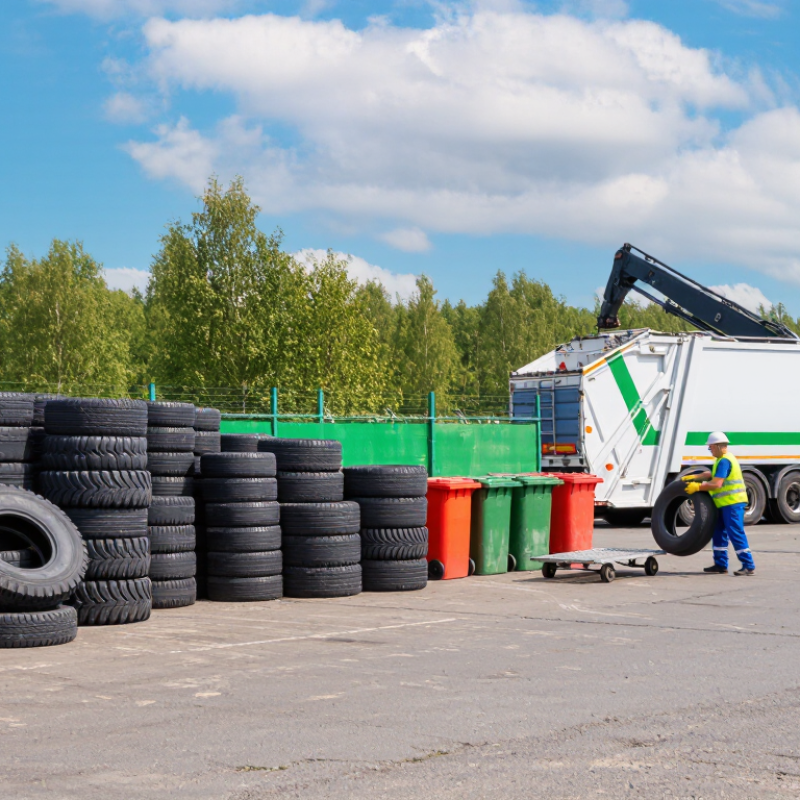
Preparing old tyres for transport starts with a quick inspection. Wear work gloves and check for trapped stones, loose wires, or sharp debris. Tyres can hold rainwater, so tip out standing water carefully and let them drain. Do not reach blindly inside; hidden metal can cause cuts. A little grit is easy to miss. Brush off loose dirt if practical, but avoid creating dust or slippery puddles.
Choose a vehicle with enough room and a stable, level loading area. Lay tyres flat when possible and keep the stack low. Secure the load with suitable straps so tyres cannot roll or shift during braking. Keep them clear of the driver’s view, and do not overload the vehicle. If a tyre is unusually heavy, ask someone to help lift it; awkward twisting can strain your back. Check that the recycling or collection site accepts the tyre type and quantity before setting out. I used to think a short trip needed less care. That is easy to get wrong.
Tips: Wear gloves and sturdy shoes. Keep straps snug, not loose. Store tyres out of the road until loading, and never leave them where someone could trip.
How to Choose a Licensed Tyre Recycling or Disposal Service
Choosing a licensed tyre recycling or disposal service starts with a direct check: ask which local authority or regulator issued its current approval, then verify it through that body’s public register or contact channel. Requirements vary by location, so a certificate from another area may not apply. Ask for written service terms, the collection address, and an itemised receipt showing the tyre quantity and collection date. Keep a copy. Details matter.
A responsible provider should explain what happens after pickup, not just promise “recycling.” Ask whether tyres go to reuse, material recovery, or another permitted treatment route, and who handles each transfer. Request a transfer record or destination facility details, where available. If staff cannot answer clearly, pause and check. Also look for practical signs: tyres stored neatly under cover, no loose piles blocking exits, and collection vehicles suited to the load. These clues do not prove compliance, but they support a fuller check. Compare quotes only after confirming what they include; a low fee may omit loading or documented handling. It is easy to treat price as the deciding detail. It isn’t enough.
How to Confirm Tyres Are Handled Responsibly
How to Confirm Tyres Are Handled Responsibly
A responsible tyre handoff should be easy to verify, not based on a vague promise. Ask the garage, collection service, or recycling centre where the tyres will go. A trustworthy provider should explain whether they are reused, retreaded, or sent to an appropriate recycling facility. Ask for a receipt or collection record showing the date, quantity, and destination. Keep it with your vehicle records. Small details matter.
If you deliver tyres yourself, check the facility’s current acceptance rules before loading them. Local waste authorities can help you find suitable options. Look for clear contact details and written information about handling. If staff cannot explain the next step, pause and ask more questions. Paperwork helps, but it is not magic; records should match what you were told. I might overlook this when I am in a hurry.
Tips: Photograph the tyres before collection, note how many are taken, and save messages or receipts. Ask whether rims must be removed. Avoid leaving tyres outside a site without confirmation. A quick call can prevent a wasted trip. Be specific.