How to Recycle Tires?
A worn tire may look like an ordinary piece of waste, but its tough rubber, steel belts, and fabric can remain useful after its tread is gone. Learning how to Recycle Tires starts with one practical question: where can a tire be accepted for safe, responsible processing? The answer often depends on local collection programs, tire retailers, and approved recycling facilities. Do not leave old tires outdoors; rainwater can collect inside them, while piles create avoidable fire and pest risks.
Michael Blumenthal, a longtime tire-recycling industry specialist, has discussed the importance of finding productive uses for scrap tires. I cannot verify a verbatim quotation from him, so the line below is a paraphrase, not a direct quote: “A tire’s next use depends on collecting it properly and matching its material to a suitable application.” That distinction matters. Reuse and recycling are not automatic, and a tire should not be described as recycled merely because it was dropped off.
This guide explains how tires are collected, sorted, and processed into materials such as crumb rubber, molded products, or engineered fill. It also looks at what consumers can check before handing over a tire, including facility practices and the destination of recovered materials. Small choices count. Recycling routes vary, and some claims deserve a closer look. The aim is useful guidance, not a promise that every tire or process has the same environmental benefit.
Check Tire Condition and Local Recycling Requirements
Before arranging tire recycling, inspect each tire in good light. Look for exposed cords, deep cuts, bulges, or a separated tread. Note whether the tire is still mounted on a rim. These details may affect handling or which local facility will accept it. A worn tire is not automatically unusable for recycling. I still find it easy to confuse “unsafe to drive” with “not recyclable”; they are different questions. Don’t drive on a tire with serious damage just to deliver it.
Check your city or county waste service, a tire collection site, or a licensed recycling facility for current instructions. Ask whether they accept passenger, truck, or specialty tires, and whether rims must be removed. Confirm limits, fees, drop-off hours, and appointment rules before loading the tires. Requirements vary by location. A quick phone call can prevent a wasted trip. Keep tires dry and secure during transport, and avoid leaving them outdoors, where rainwater can collect inside. If the local information is unclear, ask the facility to confirm the exact tire type and quantity.
How to Recycle Tires? Check Tire Condition and Local Recycling Requirements
Tire Tread Depth: Inch-to-Millimeter Conversion
Tread depth can help you assess tire condition. The values shown are unit conversions: 2/32 inch equals 1.5875 mm, often rounded to 1.6 mm. Legal limits vary by location and vehicle, so check local rules. Before recycling, confirm accepted tire types, quantity limits, fees, and whether rims must be removed with your local waste authority or tire retailer.
Prepare Tires for Drop-Off or Collection
Before arranging tire drop-off or collection, confirm that the receiving site accepts your tire type and quantity. Some facilities handle passenger tires but require separate arrangements for truck tires or tires with rims. Rules vary, so check before loading your vehicle. A quick call can prevent a wasted trip.
Remove loose dirt, stones, and other debris, but avoid spending time on a deep wash unless the facility requests it. Keep tires dry and covered while they wait; open tires can collect rainwater. If rims are still attached, ask whether they should stay on. Don’t guess. Stack tires securely, and keep them clear of walkways and drains. I once assumed a collection crew would take every tire, but size limits can be easy to miss.
Tips: Count the tires and note their sizes before booking. Place them where the crew can reach them without moving other items. Keep the stack low and stable. Follow the collector’s instructions about timing and placement, especially if pickup is scheduled for a specific day. If the instructions are unclear, ask again. That small extra step can save trouble.
Learn How Recycled Tires Are Processed
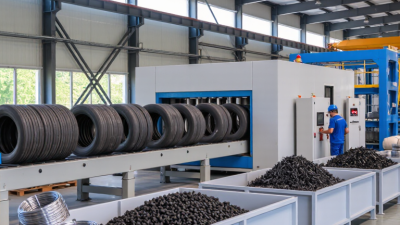
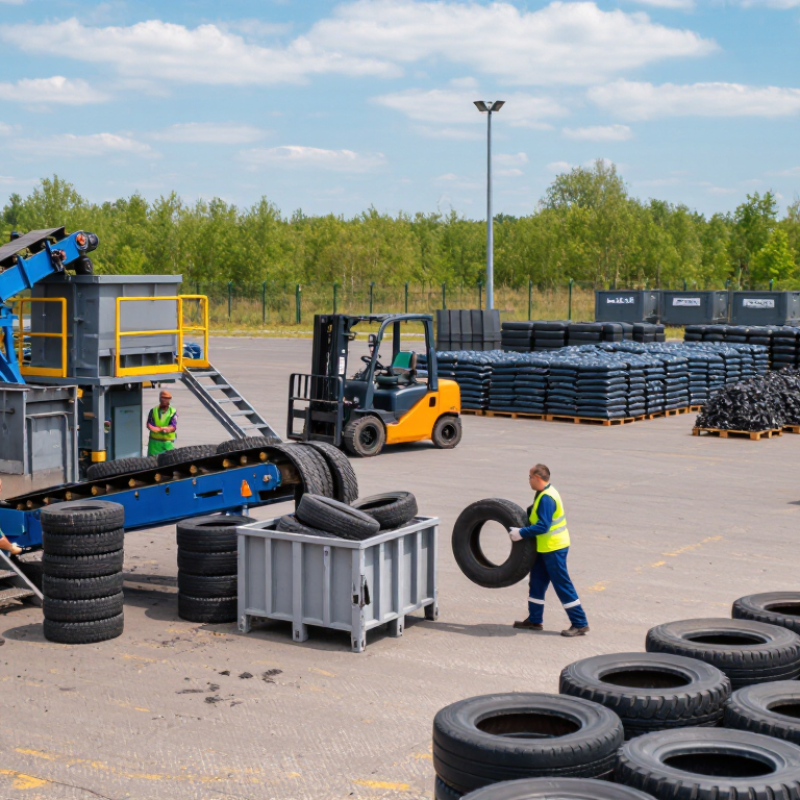
Recycling a tire begins with inspection, not a shredder. Workers remove rims and sort tires by size and condition. Casings that pass safety checks may be retreaded; worn-out tires are sent for processing. That distinction matters. Shredders cut the tires into smaller pieces, while magnets pull out steel and screens separate rubber by size. Air systems can help remove textile fibers. The work is dusty and noisy. Clean separation helps determine what the rubber can become.
The European Tyre and Rubber Manufacturers’ Association reported that about 95% of Europe’s end-of-life tires were collected in 2018. Its data show roughly 50% went to material recycling and 49% to energy recovery. These figures describe Europe, not every region. Rubber granules may be used in sports surfaces, molded products, or asphalt, depending on their quality and local specifications. Fine crumb is not automatically better. Particle size, contamination, and buyer requirements all matter. Some material still takes a less circular route, so reported recycling tonnage is worth examining alongside its final use.
Explore Common Uses for Recycled Tire Materials
How to Recycle Tires?
Explore Common Uses for Recycled Tire Materials
A worn tire can become more than waste. In the United States, about 71% of scrap tires generated in 2021 went to end-use markets, according to the U.S. Tire Manufacturers Association’s 2023 Scrap Tire Management Report. Recycled tire rubber is ground into crumb for athletic tracks, playground surfaces, and molded mats. Some is blended into asphalt, where rubber can help create a flexible road surface. Whole or shredded tires also serve in certain civil engineering projects, such as lightweight fill. Uses depend on material quality and local processing capacity.
There is a catch. Not every tire becomes a useful product, and the report’s national figure cannot describe every town’s recycling options. Tire-derived fuel is another market, but it is different from making a new rubber product. The numbers help, but they do not tell the whole story. A recycled label alone says little about where material goes.
Tips: Ask your local waste service which tire shops accept used tires, and confirm any fees before you travel. Keep tires dry and out of direct sun while storing them briefly. Clean, sorted tires are easier to handle. It’s a small detail, but it matters.
| How to Recycle Tires? - Explore Common Uses for Recycled Tire Materials |
| Recycled Tire Material |
How It Is Processed |
Common Uses |
Practical Considerations |
| Crumb rubber |
Tires are shredded and ground into small rubber particles; steel and fiber are separated during processing. |
Rubber-modified asphalt, molded products, sports surfaces, and some playground surfacing. |
Particle size and cleanliness vary by application. Surface products should be selected and installed to meet relevant safety and environmental requirements. |
| Tire-derived aggregate (TDA) |
Whole tires or tire sections are cut or shredded into larger pieces, with steel removed or reduced as required. |
Lightweight fill, drainage layers, and other engineered civil construction applications. |
Use depends on engineering specifications, site conditions, and applicable fire-safety and environmental controls. |
| Recovered steel |
Steel reinforcing wire is separated from tires during shredding and grinding, then collected for metal recycling. |
Feedstock for steel recycling and the production of new steel products. |
Steel is typically handled by metal recyclers. The amount and cleanliness recovered depend on the tire and processing method. |
| Recovered textile fiber |
Fiber reinforcement is separated from rubber and steel during tire processing. |
Uses can include selected insulation, composite, or energy-recovery applications, depending on local facilities and material specifications. |
Markets are more limited than those for rubber or steel, and fiber quality and local acceptance can affect whether it is recycled. |
| Whole or cut tires |
Tires are inspected and reused intact or cut into sections without first being fully ground. |
Some approved erosion-control, agricultural, or engineering applications. |
Reuse should follow local rules and project specifications. Improper outdoor storage can create fire risks and standing-water mosquito habitat. |
| Tire-derived fuel (TDF) |
Scrap tires are prepared to meet the size and quality requirements of an authorized industrial facility. |
Used as a supplemental fuel in certain permitted industrial processes, such as some cement kilns. |
This is energy recovery rather than material recycling. Use is facility-specific and subject to emissions permits and regulatory controls. |
Available recycling routes and end uses vary by location, tire condition, processing capability, and local regulations.