2026 Top Trends in Old Tire Disposal Solutions for Sustainable Practices?
As sustainability efforts grow globally, the urgency for effective old tire disposal solutions is undeniable. Every year, millions of tires are discarded, contributing to pollution and waste management challenges. The rise of innovative practices signals a shift towards more environmentally friendly methods.
Recycling old tires has become a pressing need. Traditional disposal often leads to environmental hazards, such as harmful emissions and water contamination. Emerging trends focus on converting waste into valuable resources. For instance, advancements in tire recycling technology now allow for materials recovery, which can create new products.
Industries are exploring creative uses for rubber, such as in construction and automotive applications. Nonetheless, not all solutions are flawless. Some methods may have limitations or call for further refinement. Continuous improvement in old tire disposal methods can pave the way for a more sustainable future. Thus, the exploration of trends in old tire disposal remains critical for both environmental and economic reasons.

Emerging Technologies for Recycling Used Tires in 2026
As the world grapples with environmental challenges, old tire disposal remains a pressing issue. In 2026, several emerging technologies are set to revolutionize tire recycling. One notable method involves the use of pyrolysis. This process heat-treats tires in an oxygen-free environment, breaking them down into oil, gas, and char. The resulting products can be used as fuel or in other industrial applications.
Another trend is the development of devulcanization techniques. This innovative approach addresses the stiffness of rubber after vulcanization. By softening rubber, manufacturers can reshape and reuse it effectively. Advances in chemical methods can yield high-quality recycled materials, but the economic feasibility is still under scrutiny.
Moreover, 3D printing technologies are beginning to incorporate rubber composites derived from recycled tires. This integration showcases how recycled materials can fulfill modern manufacturing demands. Yet, scalability remains a hurdle. Companies need to assess the sourcing and quality of recycled rubber. Increasing public awareness and cooperation can further enhance these recycling initiatives. It's crucial to reflect on the balance between innovation and real-world applications.
Innovative Methods for Upcycling Old Tires into New Products
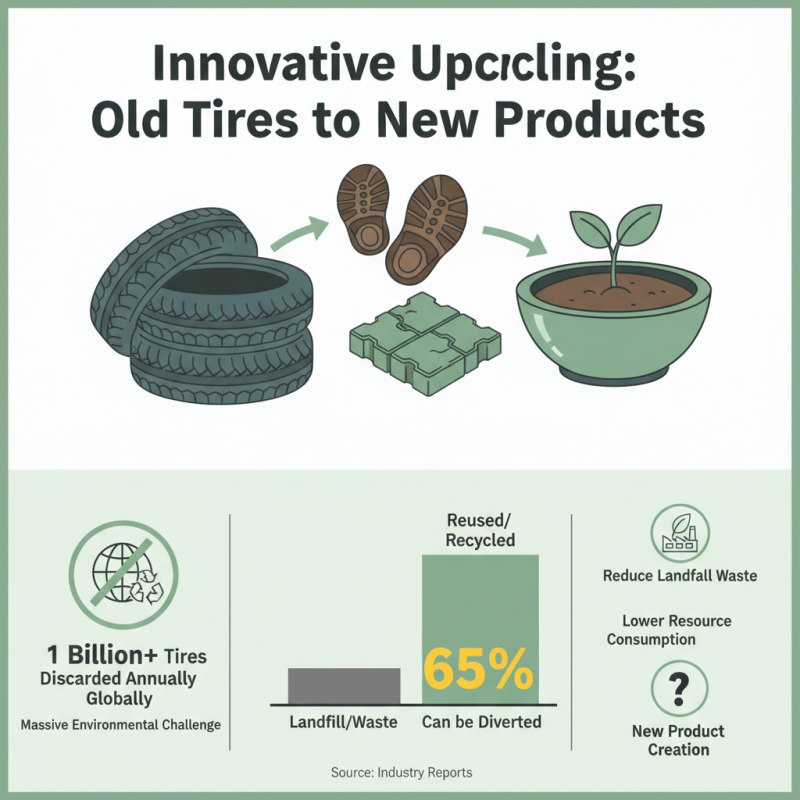
The innovative upcycling of old tires into new products is gaining traction. Reports indicate that over 1 billion tires are discarded globally each year. This massive waste poses environmental challenges. Recycling tires can significantly reduce landfill waste and resource consumption. Approximately 65% of tires can be reused or recycled instead of being sent to landfills.
Creative applications for old tires are emerging. Designers and manufacturers are turning them into footwear, furniture, and playground surfaces. There’s a growing market for tire-derived fuel, which can replace fossil fuels in manufacturing. However, only 25% of scrap tires are currently converted into new products. Bridging this gap requires investment and innovation.
Urban areas are utilizing old tires in infrastructure projects. For instance, tires are used to build sound barriers, reducing noise pollution. Still, communities face hurdles in promoting sustainable disposal practices. Education on the benefits and methods of tire upcycling is crucial. More outreach can enhance public participation in recycling initiatives, fostering a culture of sustainability.
Environmental Impacts of Tire Disposal and Sustainable Solutions
The environmental impacts of tire disposal are significant. Millions of tires end up in landfills each year. This creates a host of problems. Old tires can take decades to decompose. They can also leach harmful chemicals into the soil and water. This poses risks to local ecosystems and human health.
Sustainable solutions are emerging. Recycling tires can transform them into useful products. For instance, tires can be converted into rubberized asphalt. This improves road durability while reducing landfill waste. Another approach is tire-derived fuel, which utilizes the energy content of tires for industrial processes. However, not all methods are perfect. Some recycling facilities struggle with efficiency. Contaminants in tires can complicate processing. Therefore, innovative methods must continually evolve.
Public awareness plays a crucial role in tire disposal solutions. Many people remain unaware of the impacts of improper disposal. Educating communities on sustainable practices is essential. Collaboration between governments, industries, and the public can drive improvements. Reflecting on current practices can reveal areas for growth. New technologies and strategies must be embraced to ensure a greener future.
Regulatory Trends Influencing Tire Disposal Practices in 2026
As we move toward 2026, tire disposal practices are increasingly influenced by regulatory trends aimed at sustainability. According to the latest report from the Tire Industry Association, over 300 million tires are discarded annually in the U.S. alone. Regulatory bodies are tightening guidelines, pushing for more recycling and less landfill disposal. The Environmental Protection Agency (EPA) emphasizes the importance of repurposing tires to reduce environmental impact.
One key area of focus is the adoption of Extended Producer Responsibility (EPR). EPR mandates that manufacturers take back used tires, fostering innovation in recycling methods. This shift not only helps in reducing waste but also encourages companies to design tires for easier recyclability. In fact, industry reports suggest that implementing EPR could increase tire recycling rates to over 70% by 2026.
Tips: Explore flexible recycling programs in your area. If you're a manufacturer, consider collaborating with recycling firms. Tracking tire disposal can help businesses understand their environmental footprint better. Additionally, engage with local regulatory bodies to stay updated on emerging regulations. This proactive approach can enhance compliance and support sustainable practices within the industry.
Community Engagement in Sustainable Tire Disposal Initiatives
Community engagement plays a vital role in sustainable tire disposal initiatives. Involving local residents can enhance awareness and participation in recycling programs. Each community has unique needs and characteristics. Tailoring educational campaigns to specific demographics can improve their effectiveness. For instance, workshops can teach families how to repurpose old tires creatively. These hands-on experiences can foster a sense of pride in sustainability efforts.
Additionally, partnerships between community organizations and local governments can improve tire disposal solutions. Regular clean-up events encourage participation and create a visible impact. However, there can be challenges. Lower turnout for these events may lead to frustration among organizers. Finding ways to incentivize participation is essential. Offering rewards, such as discounts or recognition, could motivate community members.
Moreover, collecting feedback from participants can provide valuable insights. Understanding the barriers people face is key to refining these initiatives. Not everyone may see the importance of tire disposal. Education needs to address these gaps. Ongoing dialogue can help shift mindsets over time. Proper tire disposal is not just an environmental issue; it’s about building stronger, informed communities.
2026 Top Trends in Old Tire Disposal Solutions for Sustainable Practices
This bar chart illustrates the anticipated trends in sustainable tire disposal solutions for 2026, highlighting community engagement initiatives, recycling methods, and innovative disposal solutions.