Inquiry
Form loading...

Why Is Rubber Recycling Important for Global Buyers?

Rubber rarely disappears after a product reaches the end of its useful life. Tires, belts, seals, and industrial components can leave behind bulky material that is difficult to manage. For global buyers, Rubber Recycle offers a way to recover some of that material and reduce reliance on virgin resources. The benefits, however, depend on what the recycled rubber can reliably do.

A recycled material is not automatically a suitable one. Particle size, cleanliness, odor, moisture, and consistency can all affect production. Small differences matter. A shipment that looks acceptable in a sample may behave differently on a factory line. Buyers need clear specifications, representative testing, and dependable supplier records—not just a low quoted price. This article explores how recycling can support resource efficiency, where recovered rubber is commonly used, and what buyers should check when comparing suppliers. It also considers practical concerns such as processing quality, traceability, transport, and supply continuity. No single grade fits every application. The right choice depends on performance requirements and manufacturing conditions. Recycled rubber can help, but its environmental value should not be assumed from the label alone. Buyers may need to ask how material is processed and verify claims with appropriate documentation. There are gaps in what a product description can tell you. Careful questions make those gaps easier to see.
Why Is Rubber Recycling Important for Global Buyers?

What Rubber Recycling Is and How the Process Works

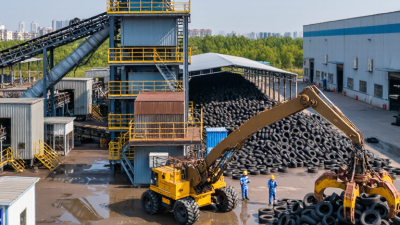
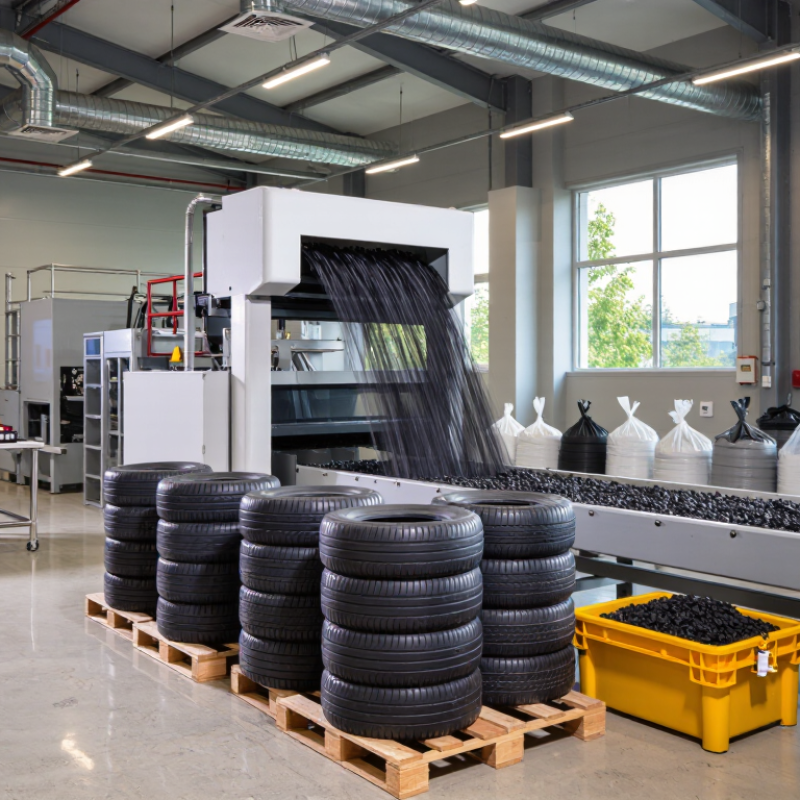
Rubber recycling turns used rubber products and manufacturing offcuts into material that can serve another purpose. For buyers, understanding the process helps explain differences in particle size, cleanliness, and consistency.

The incoming material is inspected and sorted. Workers may separate rubber from steel, textiles, or other attached materials before processing. This step matters: contamination can affect how recycled rubber performs in a new product.

The rubber is then cut or shredded into smaller pieces. Further grinding produces granules or powder, sometimes using ambient-temperature equipment and sometimes very cold conditions to make the material brittle. Magnets can remove remaining steel, while screens separate particles by size. The cleaned material may be used in flooring, molded goods, or other applications, depending on its properties and the buyer’s requirements.

It is not a magic reset. Recycled rubber can vary because its source, age, and previous use differ. I would ask suppliers how they check contamination and particle-size consistency, rather than relying on a broad label alone. Even careful processing has limits.
Which Rubber Products and Materials Can Be Recycled

Rubber recycling covers more than used tires. It can include conveyor belts, vehicle hoses, seals, floor mats, and industrial rollers. These products often contain natural rubber, synthetic rubber, or blends of both. Their composition matters: cross-linked rubber cannot simply be melted and reshaped like many thermoplastics.

Tires are commonly processed into rubber granules or crumb. These particles may be used in molded goods, flooring, or some road applications, depending on quality and local specifications. Scrap from manufacturing can also be easier to recycle because its composition and cleanliness are more consistent. Clean offcuts are valuable. Mixed waste is harder.

Buyers should ask what a recycled material contains, how it was processed, and whether it includes fabric, steel, oil, or other contaminants. A close look at a cut sample can reveal layers that a product sheet may not explain. Reclaimed rubber may suit mats or non-critical components, but it is not automatically right for every use. That distinction is easy to miss. Recycling outcomes vary with the rubber type, contamination, and intended application, so clear testing details matter.

How Rubber Recycling Conserves Resources and Reduces Waste

Rubber recycling helps global buyers reduce demand for virgin raw materials and keep usable material out of disposal streams. Scrap tires and manufacturing offcuts can be processed into crumb rubber or reclaimed rubber. These materials may be used in flooring, molded products, or road-related applications, depending on their quality and the intended use. Less waste is valuable. So is better resource use.

Tips: Ask suppliers how material is sorted, cleaned, and tested. Check particle size, contamination, and consistency across batches. A low price means little if the recycled rubber does not meet production needs. Request a sample before placing a large order.

The environmental benefit depends on the process and the product it replaces. Some recycling methods require substantial energy, and recycled rubber does not suit every application. Buyers should compare specifications and ask for clear information about processing and quality checks. Mixed feedstock can also create uneven results; that detail is easy to overlook. In practice, a reliable supply may matter as much as a strong sustainability claim, especially when production schedules leave little room for variation.

Why Is Rubber Recycling Important for Global Buyers?

U.S. end-of-life tire management, 2019 (% of generated scrap tires)

Recycling gives discarded tires productive uses and can reduce demand for virgin materials and landfill space. In this 2019 U.S. snapshot, most scrap tires went to beneficial uses; figures are rounded. Source: U.S. Tire Manufacturers Association, 2019 Scrap Tire Management Report.

What Global Buyers Should Assess in Recycled Rubber

Why Is Rubber Recycling Important for Global Buyers?

What Global Buyers Should Assess in Recycled Rubber

Recycled rubber can reduce demand for virgin material and give end-of-life tyres another use. But recycled content alone does not guarantee a dependable product. Buyers need to check what the material is made from and whether each shipment performs consistently. ETRMA’s 2021 end-of-life tyre data reported about 3.9 million tonnes of tyres generated in Europe, with roughly 95% collected and treated. That scale shows why credible recovery systems matter. It does not prove that every recycled-rubber batch is suitable for a buyer’s application.

Ask for feedstock details, particle-size ranges, moisture limits, and test results for relevant properties, such as tensile strength or compression set. Check for steel and textile contamination, too; stray fibers can affect a molded part’s finish. Request a recent certificate of analysis and compare it with a retained sample from production. Confirm how batches are identified and how changes in feedstock are disclosed. A specification may look precise on paper, yet real-world consistency can still be uneven. That deserves scrutiny.

How Buyers Can Source Recycled Rubber Responsibly

Why Is Rubber Recycling Important for Global Buyers?

How Buyers Can Source Recycled Rubber Responsibly

Responsible sourcing starts with evidence, not a recycled-content claim. The U.S. Tire Manufacturers Association’s 2021 Scrap Tire Management Report estimated that 71% of U.S. scrap tires generated in 2019 reached end-use markets. ETRMA reported that 94% of end-of-life tyres in Europe were collected and treated in 2020. These figures show progress, but collection alone does not guarantee high-quality material or transparent processing.

Ask suppliers for the feedstock origin, processing steps, recycled-content calculation, and recent test results. Match particle size, steel or textile residue limits, and performance requirements to the intended use. Request batch-level records and independent testing where practical. A clean sample on a desk can hide variation across full shipments. I would also check whether the supplier can explain rejected loads and corrective actions; that detail is easy to overlook, but it reveals how quality is managed.

Tips: Put key limits in the purchase specification, and request a sample from the actual production batch. Compare certificates with test reports. If data is missing, pause and ask why. Recycled rubber can support circular sourcing, but buyers should not treat every recycled claim as equal.

Why Is Rubber Recycling Important for Global Buyers? — How Buyers Can Source Recycled Rubber Responsibly
Sourcing dimension Relevant facts What buyers should verify Useful procurement measure
Feedstock origin Recycled rubber can come from end-of-life tires, manufacturing scrap, or other discarded rubber products. The source affects composition and potential contaminants. Request the feedstock type, country of collection, collection route, and records linking incoming material to the processed output. Record the percentage of each feedstock category by mass and identify whether it is post-consumer or pre-consumer material.
Recycling process Mechanical grinding produces rubber granules or powder. Reclaimed rubber is processed to make rubber easier to incorporate into new products. Burning rubber for energy is energy recovery, not material recycling. Ask for a process description and confirm whether the purchased material is recycled rubber, reclaimed rubber, or a blend. Specify the required material form and processing route in the purchase specification.
Recycled-content claim Recycled-content claims should be supported by documented material inputs and a clear calculation method. A supplier’s claim alone does not establish the amount in a delivered product. Request batch records, mass-balance information where relevant, and an explanation of how recycled content is calculated. Calculate recycled content by mass: recycled rubber mass divided by total rubber mass, multiplied by 100.
Material quality Particle size, steel or textile residue, moisture, and rubber composition can vary between sources and processing batches. There is no single quality specification suitable for every application. Obtain a technical data sheet and representative test results. Confirm test methods, sampling frequency, and batch identification. Set application-specific limits for particle-size distribution, foreign material, moisture, and relevant performance properties.
Chemical and product safety Chemical requirements depend on the product, its intended use, and the destination market. A material suitable for one use may not meet the requirements for another. Identify applicable local chemical, worker-safety, and product-safety rules. Request relevant laboratory reports and declarations for the intended application. Maintain a compliance checklist by product and destination market; do not rely on a general-purpose “compliant” claim.
Traceability and waste controls Waste and recycled-material shipments may be subject to national rules and, where applicable, international controls. Requirements depend on material classification and the countries involved. Check waste classification, permits, shipment documentation, and applicable rules in the exporting, transit, and importing jurisdictions. Keep supplier, facility, batch, shipment, and compliance records together for each delivery.
Environmental benefit Using recycled rubber can divert material from disposal and reduce demand for virgin inputs, but the overall environmental benefit depends on processing, transport, product life, and the comparison baseline. Ask what the environmental claim compares against and whether it includes processing and transport. Avoid treating recycled content alone as proof of lower impact. Use a defined life-cycle assessment scope for comparative claims; ISO 14040 and ISO 14044 provide life-cycle assessment principles and requirements.
Responsible claims and supplier review Environmental claims should be specific, substantiated, and not misleading. ISO 14021 addresses self-declared environmental claims, including claims about recycled content. Review evidence behind claims, audit relevant process records, and check how the supplier manages worker safety, emissions, and rejected material. Use a documented supplier review covering traceability, quality control, legal compliance, and claim substantiation.

Note: Acceptance limits and legal obligations should be set for the specific rubber application and destination market; there is no universal recycled-rubber specification.