Inquiry
Form loading...

How to Dispose of Car Tyres Safely in 2026?

In 2026, disposing of worn car tyres requires more care than leaving them beside a rubbish bin. Car Tyre Disposal protects roads, waterways, public spaces, and recycling workers. A damaged tyre may contain exposed steel wires, sharp edges, or trapped rainwater. It can also become a breeding place for insects when stored outdoors. Responsible disposal begins before the tyre leaves your vehicle. Check its condition, keep it dry, and avoid stacking unstable piles near children or pets.

Most drivers should contact a licensed tyre retailer, garage, or authorised recycling facility. Many tyre shops accept old tyres when fitting replacements, although collection fees and limits can vary. Ask where the tyres will go. A trustworthy provider should explain whether they are reused, retreaded, shredded, or processed into other products. Local authority websites can confirm approved options and current requirements. Rules differ between regions.

Do not burn tyres or abandon them in fields, alleys, or waterways. Burning creates harmful smoke, while illegal dumping can contaminate soil and attract pests. Simple choices matter. Transport tyres securely, preferably inside a vehicle or trailer with no loose movement. I should acknowledge one practical weakness: recycling access is not equally convenient everywhere. Some rural drivers may need to travel farther or arrange collection. That inconvenience does not justify unsafe disposal. Keep the receipt, ask questions, and reconsider any service that cannot describe its process clearly. Safe disposal is not perfect, but informed action makes the outcome far more reliable.
How to Dispose of Car Tyres Safely in 2026?

Identify When Car Tyres Need Safe Disposal

A car tyre needs safe disposal when its tread reaches the wear bars or measures about 1.6 millimetres. This limit is widely used in tyre safety guidance, but local requirements may differ. Do not wait for a puncture. Replace tyres showing deep cracks, sidewall cuts, bulges, exposed cords, or uneven wear. A steering vibration can also signal internal damage. It deserves inspection.

Age matters, even when tread looks acceptable. The U.S. National Highway Traffic Safety Administration advises checking tyre age, while industry guidance commonly recommends careful evaluation after six years and replacement by ten years. The manufacturing date appears in the tyre identification code. Heat, sunlight, heavy loads, and underinflation can accelerate ageing. I once trusted good-looking tread too much. That was a poor assumption.

Disposal volume is substantial. The U.S. Tire Manufacturers Association reported about 259 million end-of-life tyres generated in the United States during 2021, with roughly 71% directed to beneficial uses. The European Tyre and Rubber Manufacturers’ Association has reported approximately 3.5 million tonnes of end-of-life tyres arising annually in Europe. These figures show why dumping or storing damaged tyres is not a harmless shortcut. Remove the tyre from service, keep it away from flames and standing water, and contact an authorised tyre retailer, municipal collection site, or licensed recycler. Ask where it goes. Records and collection receipts can improve confidence, although disposal systems are not equally transparent everywhere.
How to Dispose of Car Tyres Safely in 2026?

Identify When Car Tyres Need Safe Disposal

How to read this chart: A tread depth of 3.0 mm is commonly used as an advisory point to start planning replacement, especially where wet-weather performance matters. In the UK and many European jurisdictions, 1.6 mm is the legal minimum for passenger-car tyres across the central three-quarters of the tread and around the tyre’s circumference.

Dispose of a tyre immediately if it reaches the legal limit, has exposed cords, deep cuts, cracks, bulges, puncture damage that cannot be safely repaired, or shows severe uneven wear. Tyres should also be inspected after six years of service and replaced by ten years from the manufacturing date, regardless of remaining tread; local regulations and professional guidance may differ.

Prepare Old Tyres for Collection or Drop-Off

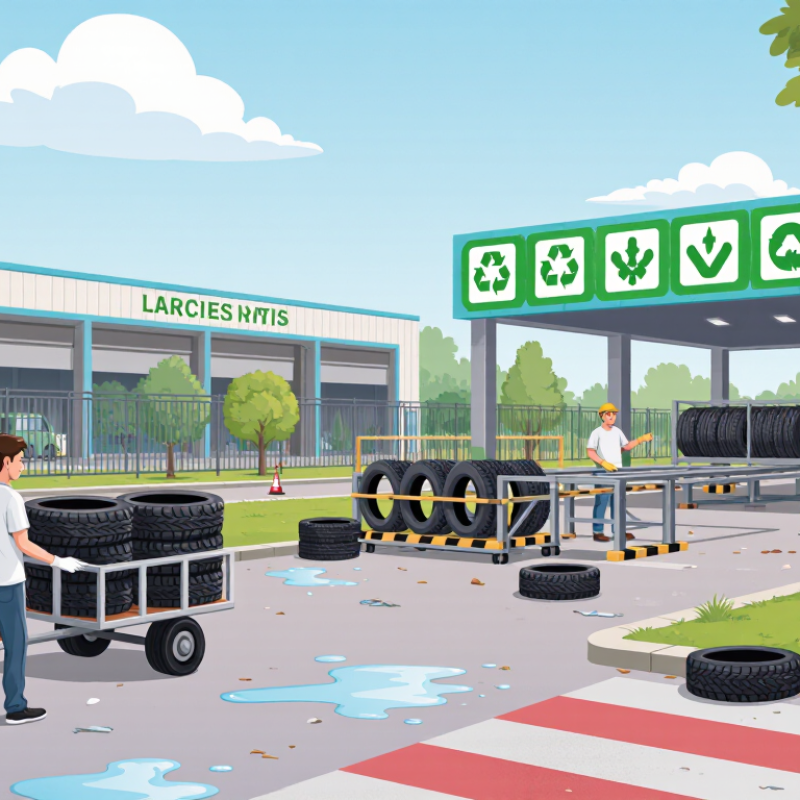
Preparing old car tyres properly makes collection safer and prevents delays. Check your local council or authorised tyre recycler before moving them. Accepted sizes and booking rules vary in 2026. Remove loose mud, stones, and trapped metal, but do not cut, drill, or burn the rubber. A tyre may look empty while holding water, grit, or a hidden screw. Wear sturdy gloves and closed shoes. Keep tyres upright on a dry, shaded surface until collection.

Tips: Confirm the collection date and maximum number of tyres. Stack them flat only if stable, and never create a tall, leaning pile. If rain is expected, cover tyres without sealing wet air inside. Secure them in a trailer with straps. Do not leave them rolling near roads. For drop-off, place tyres in the vehicle carefully and ask staff where to unload. Some sites require rims removed, while others accept complete wheels. I once assumed every depot followed the same rule. It did not.

At handover, tell staff how many tyres you have and whether any are damaged or unusually large. Keep tyres away from children, pets, drains, flames, and electrical equipment. Do not hide them in general rubbish or leave them beside a full collection point. Take a quick photograph before departure if several tyres are collected. It can help verify the handover later. Small preparation matters.

Find Licensed Tyre Recycling and Disposal Services

How to Dispose of Car Tyres Safely in 2026?

Find Licensed Tyre Recycling and Disposal Services

Old car tyres should go to a licensed recycling or disposal service, not a roadside pile. Contact your local council or environmental authority for an approved operator. Ask whether the service accepts your tyre size and location. A reliable provider should explain where the tyres will go.

Before booking, check the company’s licence details and collection conditions. Request a written receipt showing the number of tyres collected. Some operators provide a transfer record or disposal certificate. Keep it with your vehicle records. This small document can prove responsible handling later.

Look at the collection process closely. Tyres should be loaded safely, without blocking paths or leaking fluids. Ask whether the operator transports them to an authorised processing facility. Reputable facilities may reuse rubber, recover steel, or produce suitable materials for construction.

I once assumed the cheapest pickup was automatically practical. It was not. The provider gave vague answers about the final destination. That hesitation mattered. A clear service should answer direct questions without pressure. Avoid anyone offering cash-only collection or refusing basic paperwork. Never burn tyres or leave them beside general rubbish bins. They can hold rainwater, attract pests, and create serious environmental problems. If a service sounds uncertain, pause and verify it through an official local source.

How to Dispose of Car Tyres Safely in 2026? - Find Licensed Tyre Recycling and Disposal Services

Disposal or Recycling Route Best For What to Prepare Licence or Compliance Check Likely Material Outcome Safety and Legal Notes Recommendation
Licensed tyre recycling facility Large quantities of passenger-car, van, motorcycle or commercial-vehicle tyres. Separate tyres from general waste. Keep them reasonably clean, dry and free from oil, chemicals and attached rubbish. Confirm that the operator is authorised by the relevant environmental regulator to receive and process waste tyres. Tyres may be mechanically shredded or granulated into rubber, steel and textile fractions for further processing. Ask for a receipt, waste transfer record or equivalent documentation where required by local law. Recommended
Authorised vehicle service or tyre retailer take-back Replacing a small number of tyres during a fitting or repair appointment. Arrange take-back before the appointment and confirm whether loose tyres are accepted. Check that the business sends used tyres to an authorised collector, recycler or permitted treatment site. Tyres are normally consolidated with other used tyres before reuse, retreading or recycling assessment. Take-back conditions, charges and quantity limits vary by location and by business. Recommended
Local authority or municipal recycling centre Households disposing of a limited number of used car tyres. Check opening times, resident eligibility, quantity limits and whether tyres must be separated from wheels. Use only a facility listed by the local authority or environmental regulator. Accepted tyres are directed to approved reuse, recovery or recycling channels. Many centres do not accept tyres from businesses, oversized tyres or tyres containing other materials. Check Local Rules
Licensed waste-collection service Businesses, workshops, property managers or households unable to transport tyres safely. Count and classify the tyres; provide collection access details and disclose contaminated or unusual tyres. Verify the collector’s waste-carrier authorisation and ask where the tyres will be delivered. Collected tyres are transported to an authorised sorting, reuse, recovery or recycling facility. Keep collection records, invoices and transfer documents when required for commercial waste compliance. Recommended
Retreading or approved second-life assessment Commercial or passenger tyres that may still have a sound casing and sufficient structural condition. Do not alter, cut or repair the tyre before professional inspection. Keep service history where available. Use an authorised professional that follows applicable inspection, safety and retreading standards. A suitable casing may be retreaded or reused; tyres that fail inspection should enter an approved recycling route. Never sell or reuse a tyre with visible structural damage, exposed cords, severe cracking or unsafe tread condition. Professional Assessment
Tyres still mounted on wheels Vehicle owners transporting tyres directly to a service point or collection site. Confirm whether the receiving facility accepts complete wheel assemblies. Secure loads and protect valve stems and rims. Ask whether the facility requires tyres to be demounted before acceptance. The tyre and metal wheel are separated for independent recovery where appropriate. Do not place loose wheels or tyres where they can roll into traffic. Avoid overloading a vehicle. Confirm Before Delivery
Illegal dumping, burning or general rubbish disposal Not an acceptable disposal route. No preparation makes these methods safe or compliant. These methods bypass required waste controls and may breach local environmental and waste laws. Dumped tyres can accumulate water and create pest hazards; burning can release hazardous smoke and leave contaminated residues. Never burn tyres, bury them, leave them on public land or place them in household rubbish unless local rules explicitly permit it. Do Not Use

2026 checklist: Contact the receiving facility first, confirm accepted tyre types and quantities, verify the operator’s current authorisation with the relevant local regulator, transport the tyres securely, and retain any receipt or transfer record. Requirements, fees and household or commercial limits vary by jurisdiction.

Transport and Hand Over Tyres Without Safety Risks

How to Dispose of Car Tyres Safely in 2026?

Transporting worn car tyres requires more care than many drivers expect. A tyre may look harmless, but its weight and shape can cause injuries. Wear sturdy gloves and closed-toe shoes before moving each one. Check for exposed wires, sharp metal, or trapped stones. Keep children and pets away.

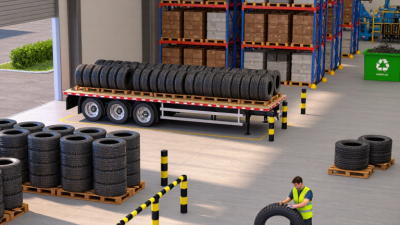
Place tyres upright and carry them with both hands. Do not drag them across wet floors or steep driveways. In a vehicle, keep the load low and prevent movement with strong straps. Never place loose tyres beside the driver, under pedals, or near passengers. Four tyres can roll suddenly. That is enough to distract a driver.

Contact a local tyre collection point before travelling. Confirm its opening hours, accepted tyre sizes, and handling fees. Some facilities require tyres to be clean and separated from other waste. At handover, tell staff if a tyre is damaged, punctured, or carrying a temporary repair. Follow their unloading instructions, even when they seem overly cautious. Keep the receipt or transfer record when available.

A common mistake is overloading a small car. I have seen people stack tyres higher than the rear window, reducing visibility. That shortcut feels convenient, but it creates a serious risk. If the load cannot be secured properly, use a suitable collection service instead. Never burn, abandon, or place tyres in ordinary household bins.

Understand Recycling Options and Disposal Regulations

How to Dispose of Car Tyres Safely in 2026?

Understand Recycling Options and Disposal Regulations

Old car tyres should never be left beside roads, waterways, or ordinary bins. They can collect rainwater, attract pests, and create serious fire risks. Contact your local council or waste authority before moving them. Regulations differ between countries, states, and municipalities.

Many licensed tyre shops and waste facilities accept used tyres for a fee. Some provide collection when fitting replacement tyres. Ask where the tyres will go. Reusable tyres may be inspected, retreaded, or resold through approved channels. Damaged tyres are often shredded into rubber, steel, and textile materials. These materials can support road surfaces, playground flooring, or civil engineering projects.

Keep tyres dry and away from heat while waiting for collection. Do not cut, burn, bury, or abandon them. Transport limits may apply, especially when carrying many tyres for a business. Request a receipt or disposal record from the service provider. It can prove responsible handling if local authorities require documentation.

Rules can feel confusing. That is a real weakness. Some websites give outdated advice, while local guidance changes after new waste policies. Check the authority’s current instructions in 2026, not an old forum post. A cheap option is not always a legal or responsible one. Ask direct questions about licensing, recycling routes, and final treatment before handing over the tyres.